















Quick Summary
78% of buyers choose the first company that responds. Chili Piper’s great at scheduling, but it wasn’t built for deep Salesforce routing. Here are the top three alternatives.
Here are our top 3 picks:
| Tool | Best For | Pricing | G2 Rating |
|---|---|---|---|
| Kubaru | Salesforce-native routing with no code and no complexity | $20/user/mo | 4.9/5 stars |
| NC Squared | Rule-based assignment across sales and service objects | $55/user/mo | 4.9/5 stars |
| Traction Complete | Mid-market and enterprise RevOps teams needing routing plus data management | $39/user/mo | 4.7/5 stars |

Why Salesforce Teams Explore Chili Piper Alternatives
78% of deals go to the first company that responds. That makes routing speed a revenue problem, not just an ops convenience.
Chili Piper’s Routing & Scheduling starts at $15,000 per year for 15 seats, with additional seats costing $45 per user per month. It also routes through an external integration rather than inside Salesforce. If your team needs territory logic, workload balancing, and multi-object assignment, that’s a lot of overhead for a scheduling-first tool.
The ten alternatives below focus on getting records to the right rep faster, with deeper Salesforce-native capabilities and more predictable pricing.
Why Listen to Kubaru?
Kubaru’s a Salesforce-native lead routing tool used by fintech and healthcare companies like North American Bancard, Human Interest, and ModMed. Their teams manage assignment across hundreds of reps without touching code or waiting on Salesforce admins.
What is Chili Piper?
Chili Piper is a lead-routing and meeting-scheduling platform. It’ll connect inbound prospects to the right sales rep instantly. Its core capabilities include real-time lead routing, round robin and group routing, and instant meeting scheduling.
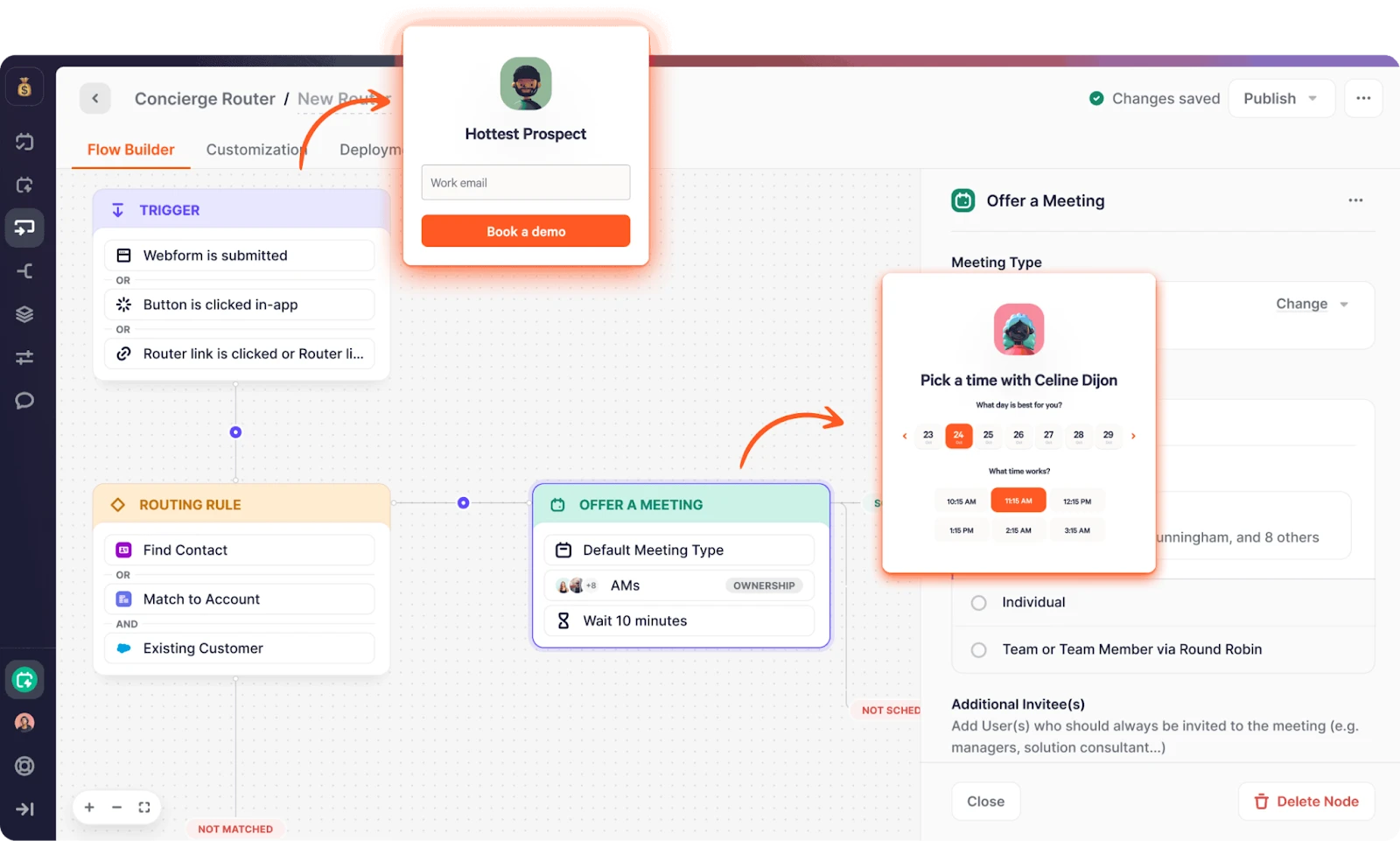
But Chili Piper has some limitations worth knowing about.
Scheduling-First Focus. Routing through Chili Piper is tightly bundled with its scheduling engine. So if you only need routing, you’ll end up paying for capabilities you don’t use.
Complex Advanced Routing. If you’ve got layered territory logic, skill-based assignment, or workload balancing, Chili Piper’s routing rules can feel limited compared to assignment-focused tools.
Higher Cost for Routing-Only Needs. Chili Piper’s Routing & Scheduling plan costs $15,000 per year for 15 seats, with additional seats priced at $45 per user per month. For teams focused solely on lead routing, that’s a lot to pay for routing alone.
Not Fully Salesforce-Native. Chili Piper connects to Salesforce through an integration rather than running inside it. That means your routing data passes through an external system.
Top 10 Chili Piper Alternatives
Here are the ten best Chili Piper alternatives for Salesforce lead routing.
| # | Tool | Key Features | Best For | Main Limitation | Pricing | G2 Rating |
|---|---|---|---|---|---|---|
| 1 | Kubaru | Weighted round robin, territory, skill-based, workload balancing, SLA rules, multi-object | Salesforce teams needing fast, flexible routing with no code | Setup requires careful initial configuration | $20/user/month | 4.9/5 stars |
| 2 | NC Squared | Capacity controls, weighted distribution, SLA enforcement, lead matching | Sales and service teams needing rule-based assignment across objects | Reporting and analytics lack depth for larger teams | $55/user/mo | 4.9/5 stars |
| 3 | Traction Complete | Lead-to-account matching, workflow-based assignment, multi-object routing | Mid-market and enterprise RevOps teams | Advanced config may need Salesforce admin involvement | $39/user/mo | 4.7/5 stars |
| 4 | LeanData | Lead-to-account matching (95%), multi-object orchestration, buyer signals | Enterprise teams with complex GTM workflows | Steeper cost and longer implementation time | Custom (per user/month) | 4.6/5 stars |
| 5 | Q-Assign by Ortoo | AI-powered rules, availability routing, dynamic round robin, code-free config | Sales and service teams needing intelligent, multi-factor routing | Minimum spend may feel high for small teams | Custom | Not yet reviewed |
| 6 | Sweep | Rule-based routing, workflow automation, operational visibility, round robin | RevOps teams managing complex territory logic | Heavier than necessary for simple routing needs | Custom | 4.9/5 stars |
| 7 | Plauti | Data cleaning, deduplication, rule-based routing, automated assignment | Teams that need data quality and routing in one tool | Duplicate matching setup has a learning curve | Custom | 4.5/5 stars |
| 8 | LeadAngel | Lead routing, lead-to-account matching, on-the-spot handoff | Teams prioritizing matching accuracy and SDR-to-AE handoff | Advanced criteria setup requires careful planning | Custom | 4.5/5 stars |
| 9 | RevenueHero | Automated routing, qualification logic, CRM sync, meeting booking | B2B teams combining inbound routing with scheduling | Not Salesforce-native; runs as an external integration | From $25/user/mo + $79 platform fee | 4.8/5 stars |
| 10 | ZoomInfo Operations | Territory routing, lead enrichment, ops orchestration, multi-object | Teams wanting enrichment and routing in one platform | Routing is a supporting feature, not the core product | Custom | 4.4/5 stars |
1. Kubaru

Kubaru is a Salesforce-native lead routing tool built for sales and RevOps teams. We assign leads, cases, and any Salesforce object to the right rep the moment a record hits Salesforce. Routing runs through territory, skill, workload, and weighted round robin.
Because our platform runs entirely inside Salesforce, your data never leaves the platform. Sales ops and business users can manage assignment rules themselves; no waiting on system admins or developers, so you have direct control over your routing workflows.
Kubaru also offers SLA management to handle what happens after assignment. It reassigns records automatically when reps don’t act within the required timeframe, helping keep leads from going cold.
Key Features
- Round Robin Assignment: Distribute leads or cases evenly across reps, with weighted options so busier reps take a lighter share
- Territory-Based Routing: Route records by geographic region or defined territories using territory management rules
- Skill-Based Assignment: Match leads to reps based on product expertise, language, or any custom attribute
- Workload and Availability Routing: Assign according to current rep capacity, working hours, and out-of-office settings so no one gets overloaded
- Multi-Object Support: Assign leads, cases, accounts, opportunities, and any custom Salesforce object from one platform
- Automatic Reassignment: Reassign unworked or stale records so no lead stays untouched and goes cold
- Assignment Notifications: Send alerts via email, mobile, Slack, or Microsoft Teams the moment a record’s assigned
Pricing
Kubaru is $20 per user per month, and every feature’s included at that price. There aren’t any tiered plans, and nothing’s held back as a paid add-on. Onboarding and support are free for as long as you’re a customer. You can try the whole product free for 30 days on the Salesforce AppExchange.
Pros
- Runs entirely inside Salesforce with no external integrations, so your data never leaves your environment
- Supports territory rules, weighted round robin, workload balancing, and automatic reassignment in one tool
- Routing logic is manageable without heavy IT involvement, so business users can own the rules
- Simple per-user pricing with all features included makes budgeting predictable
Cons
- Setup requires careful initial configuration to get your routing logic right
G2 Rating
4.9/5 stars (8 reviews); more than 150 five-star reviews on the Salesforce AppExchange.
Best For
Salesforce teams that want fast, flexible routing managed by business users, without code, external platforms, or unpredictable pricing.
Why Choose Kubaru Over Chili Piper
Chili Piper’s routing runs through an external integration, so your data passes through a third-party system before reaching Salesforce. Kubaru runs entirely inside Salesforce, keeping your assignment logs, audit trails, and routing logic in one place.
There’s also a cost gap. Chili Piper’s Routing & Scheduling plan starts at $15,000/year for 15 seats, with additional seats billed at $45/user/month. Kubaru costs $20 per user per month, includes every routing feature, and has no add-ons. Its free initial configuration and unlimited assignment rules let teams move beyond Salesforce’s 3000 rule cap without adding a broad platform to their stack.
2. NC Squared (Distribution Engine)
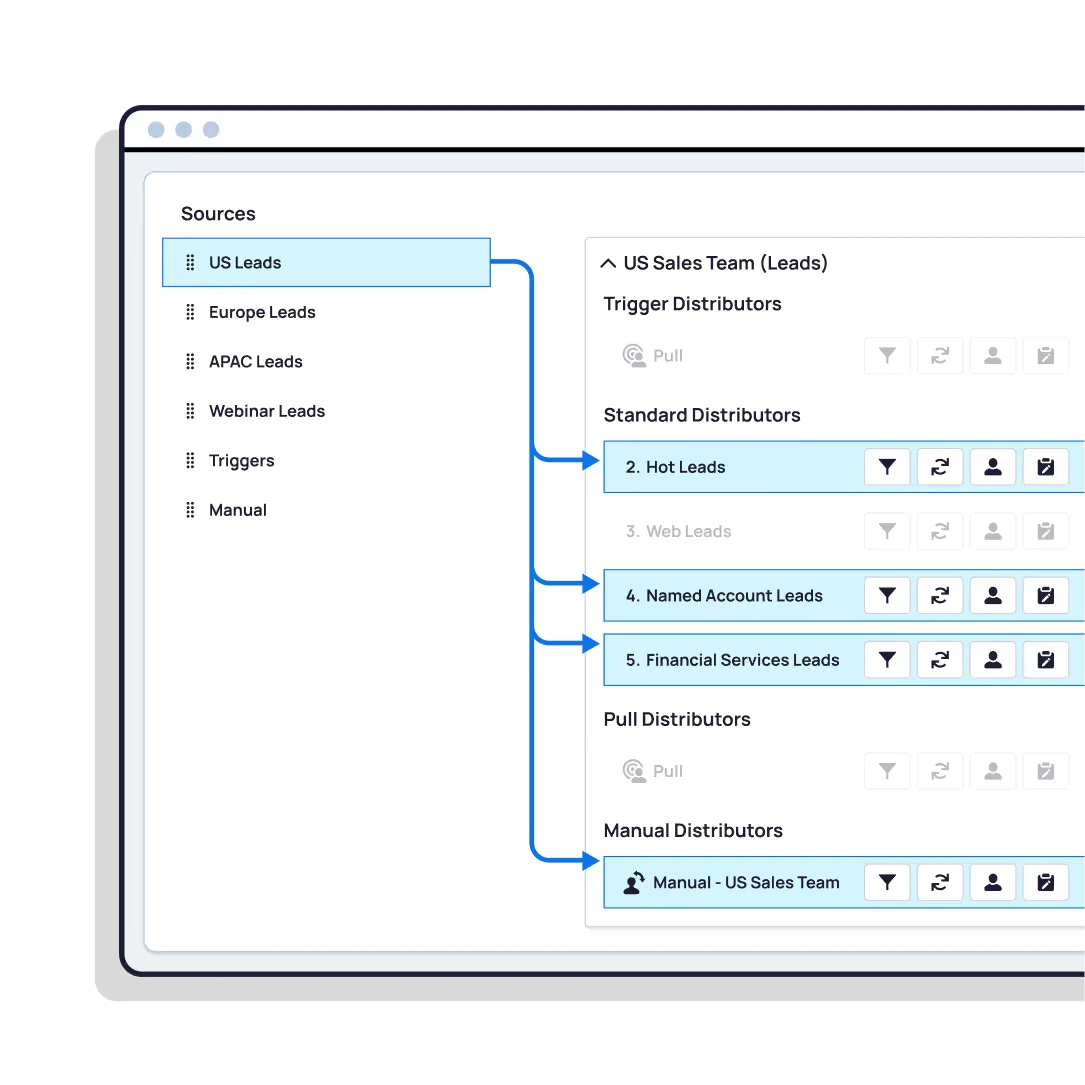
NC Squared’s Distribution Engine is a Salesforce-native routing and assignment tool. It’ll automatically distribute leads, cases, contacts, opportunities, accounts, and custom objects based on intelligent rules.
Key Features
- Automatic Record Routing: Assign Salesforce records based on configured rules across any object type
- Rule-Based Logic: Route by territory, ownership, lead-to-account rules, availability, and workload balancing
- SLA Enforcement: Track assignment times and auto-reassign when SLA rules aren’t met
- Lead Matching Capabilities: Match leads to existing accounts or auto-convert qualified records
Pricing
NC Squared offers three plans:
- Starter: $20/user/month
- Advanced: $35/user/month
- Unlimited: $55/user/month
Pros
- It’s fully native, with secure data storage inside Salesforce
- Supports complex routing logic with workload, availability, territory, and fairness rules
Cons
- Reporting and analytics don’t offer much depth for larger teams
- Some reviewers noted there’s less flexibility for very specific assignment criteria
G2 Rating
4.9/5 stars (10 reviews).
Best For
Sales and service teams that need rule-based assignment across multiple Salesforce objects and want to stay fully native.
Why Choose NC Squared Over Chili Piper
NC Squared’s built for teams that need to route more than just leads. It handles cases, contacts, opportunities, accounts, and custom objects through one Salesforce-native platform, with SLA enforcement and automatic reassignment built in. Chili Piper’s routing focuses on inbound leads tied to scheduling, so it doesn’t cover the broader assignment needs that come up as teams scale.
3. Traction Complete
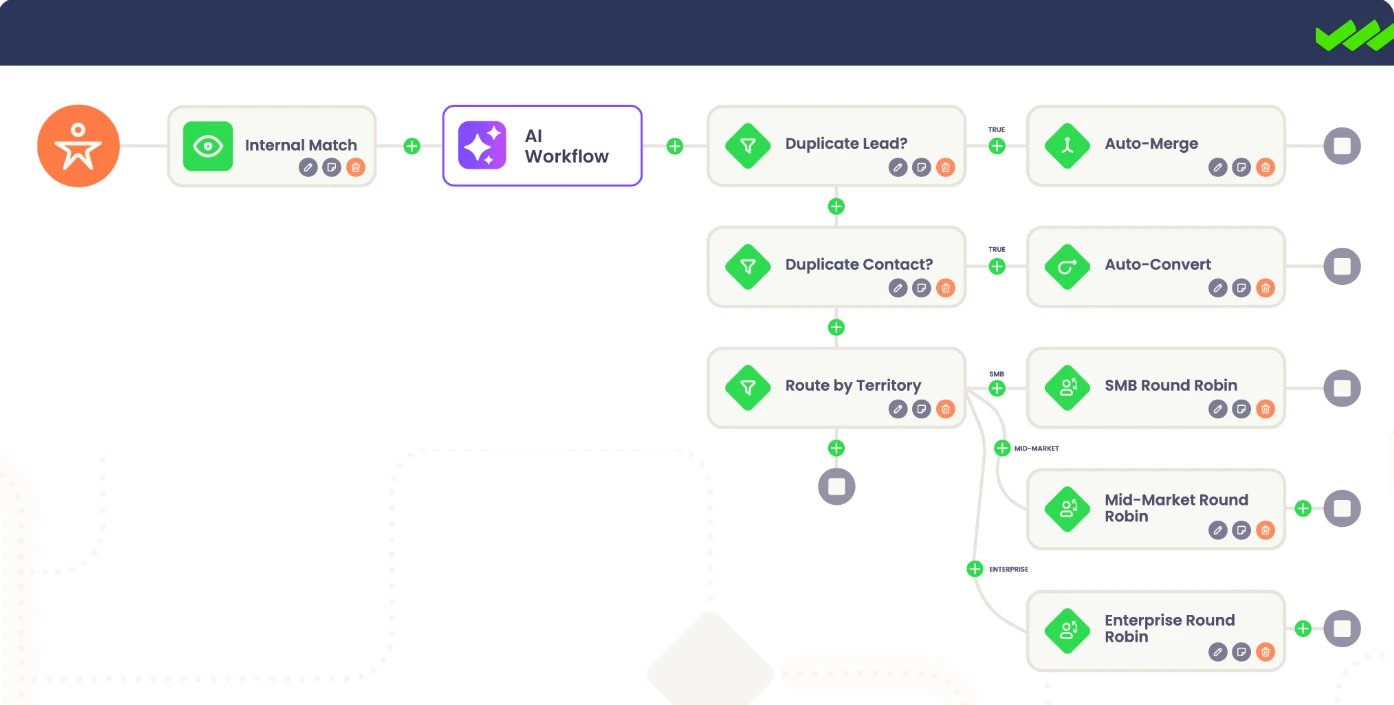
Traction Complete is a Salesforce-native routing and data management platform. It’ll automate lead distribution, territory alignment, and record matching directly inside Salesforce.
Key Features
- Lead-to-Account Matching: Automatically match incoming leads to existing accounts so they’re routed properly
- Workflow-Based Assignment: Use rule layering and Salesforce logic to control routing decisions
- Multi-Object Support: Route leads, contacts, accounts, opportunities, and other record types
- Automation Inside Salesforce: It’s fully within Salesforce, so there’s no external system involved
Pricing
It offers custom pricing based on team needs.
Pros
- It’s Salesforce-native, so everything stays inside the platform
- Good fit for mid-market and enterprise teams with complex account structures
Cons
- Advanced configuration may require Salesforce admin involvement
- Routing logic focuses primarily on new and marketing-qualified leads, so it won’t cover your full pipeline
G2 Rating
4.7/5 stars (175 reviews).
Best For
Mid-market and enterprise RevOps teams that need lead-to-account matching alongside routing inside Salesforce.
Why Choose Traction Complete Over Chili Piper
Traction Complete combines routing with lead-to-account matching and data quality tools, all inside Salesforce. If your team relies on accurate account matching for territory-based assignment, Chili Piper doesn’t offer those capabilities natively.
The trade-off is that Traction Complete doesn’t include meeting scheduling. If you need both routing and booking, you’ll need a separate scheduling tool.
4. LeanData
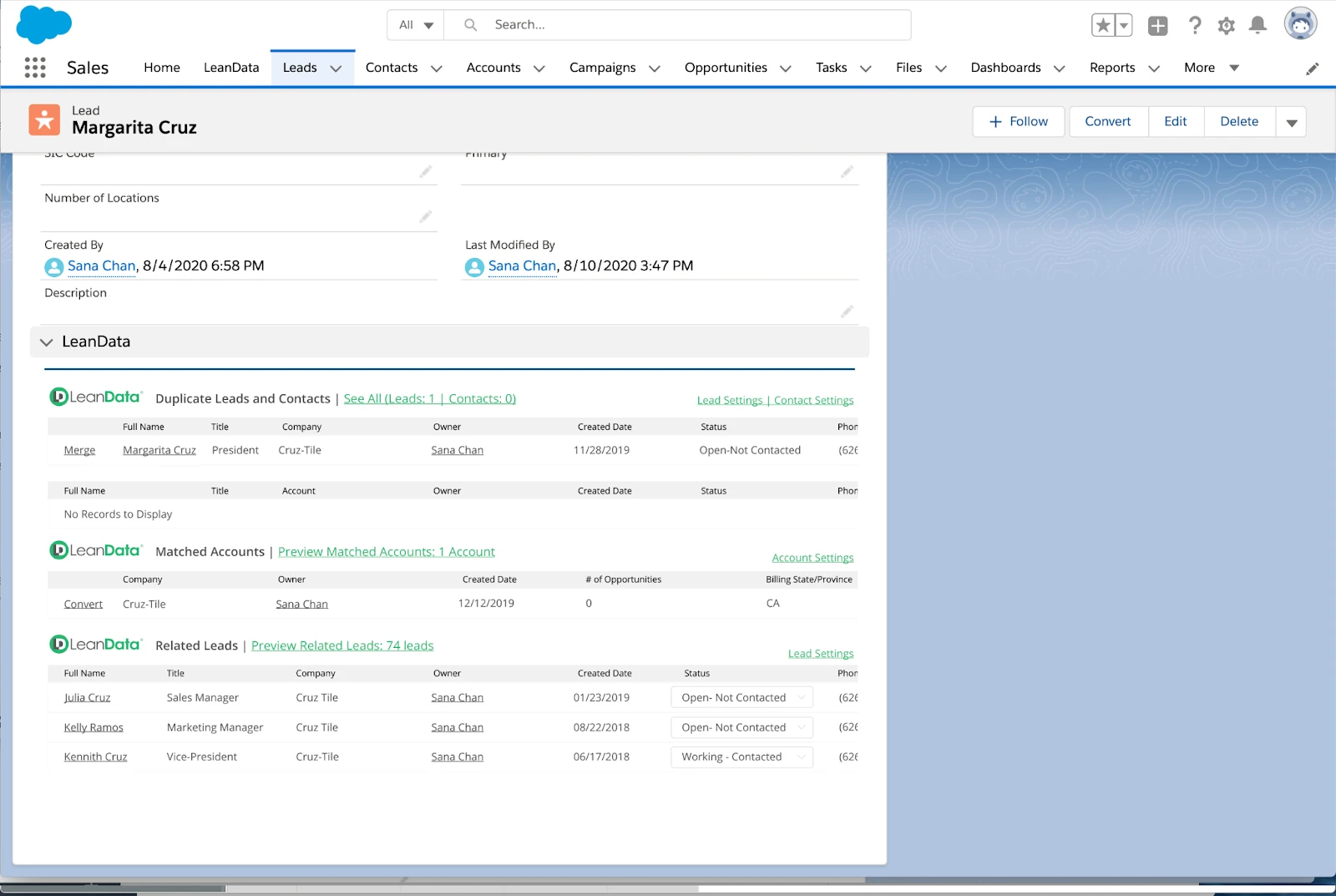
LeanData is a Salesforce-native GTM orchestration platform built for enterprise revenue teams. Companies like Snowflake and Monday.com use it for complex go-to-market workflows.
Key Features
- Lead-to-Account Matching: Match leads to existing accounts with 95% accuracy using AI-powered algorithms
- Multi-Object Routing: Route leads, contacts, accounts, opportunities, and custom objects
- Real-Time Buyer Signals: Trigger automated GTM plays based on live buyer intent data
- Speed-to-Lead Automation: Route high-intent leads instantly when they enter Salesforce
Pricing
LeanData offers four plans (Standard, Advanced, Premium, Enterprise) priced per user per month. Contact LeanData directly for exact pricing.
Pros
- It’s got powerful routing logic that handles complex multi-touch enterprise GTM workflows
- Strong lead-to-account matching accuracy that reduces routing errors
Cons
- It’s a steeper cost and longer implementation time compared to focused routing tools
- You’ll need ongoing admin effort to maintain routing flows at scale
G2 Rating
4.6/5 stars (1,052 reviews); LeanData won G2’s 2026 Best Sales Product Award.
Best For
Enterprise revenue teams with complex go-to-market workflows that span multiple objects and buying groups.
Why Choose LeanData Over Chili Piper
LeanData’s built for enterprise teams managing multi-object routing, buyer signals, and complex GTM orchestration. Chili Piper handles inbound routing well, but it doesn’t offer the same depth of lead-to-account matching or visual workflow building. The trade-off is that LeanData costs more, takes longer to deploy, and needs ongoing admin support.
5. Q-Assign by Ortoo
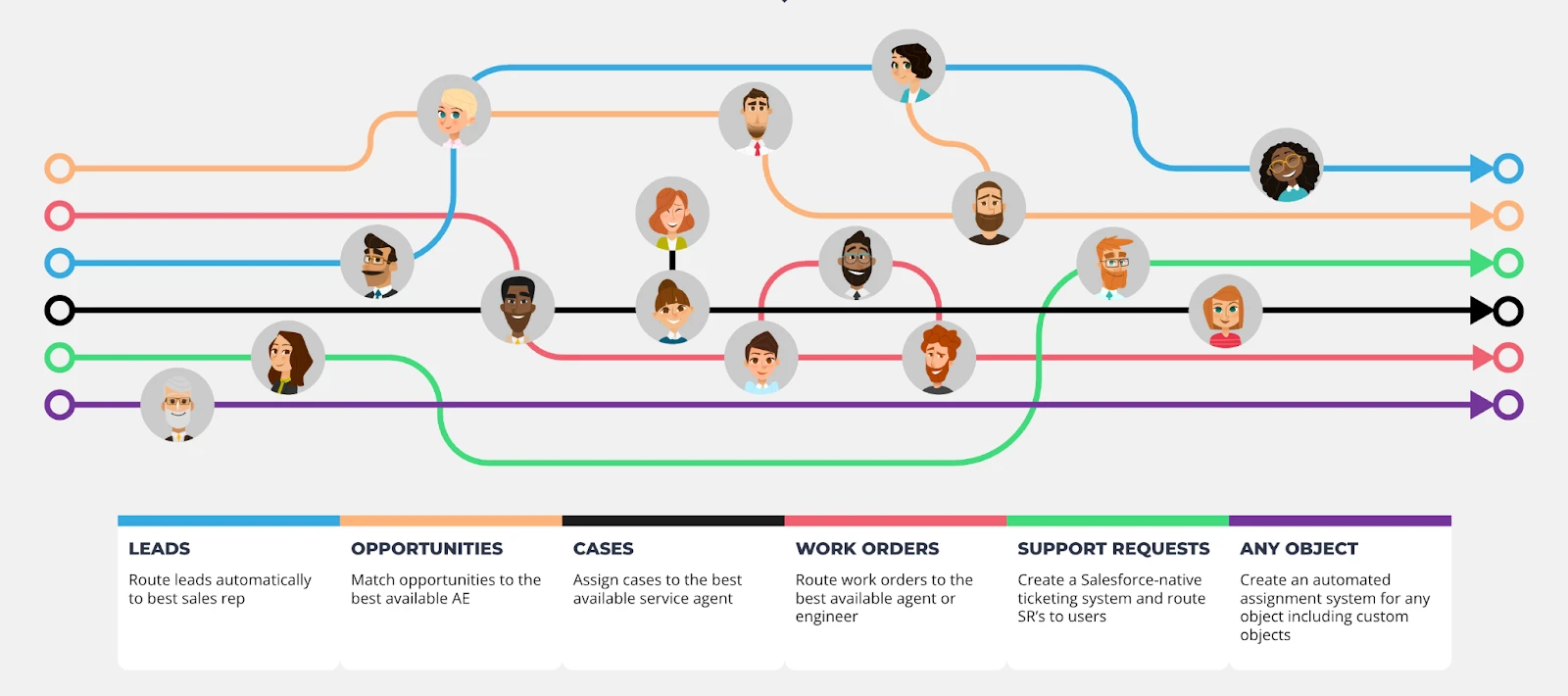
Q-Assign is an AI-powered, Salesforce-native assignment tool built for sales and service teams. Companies like Land Rover use it to cut resolution times and remove admin dependency from routing.
Key Features
- AI-Powered Assignment Rules: Automatically prioritize and assign records, and you won’t need to write code
- Availability-Based Routing: Assign only to users who are currently available
- Dynamic Round Robin: Distribute evenly while adjusting for individual workload
- Code-Free Configuration: Point-and-click setup lets Sales Ops teams manage rules directly
Pricing
It uses volume-based pricing tied to work items, not users or individual actions. Custom quote based on workflow and monthly volume.
Pros
- AI-driven routing handles complex, multi-factor assignment scenarios well
- It’ll route any Salesforce object from one tool without custom code
Cons
- Minimum spend threshold may feel high for small teams
- Enterprise-level depth can exceed what simpler routing needs require
AppExchange Rating
4.9/5 stars on AppExchange (139 reviews)
Best For
Sales and service teams that need AI-assisted prioritization and multi-factor routing across Salesforce objects.
Why Choose Q-Assign Over Chili Piper
Q-Assign adds AI-powered prioritization to Salesforce record assignment. Records aren’t just distributed evenly; they’re routed based on factors such as rep skills, availability, and current workload. Chili Piper uses rule-based logic tied to scheduling, which works well for structured assignment workflows but may be less suited to sales and service teams that must weigh multi-factor scenarios when deciding who should receive each record.
6. Sweep
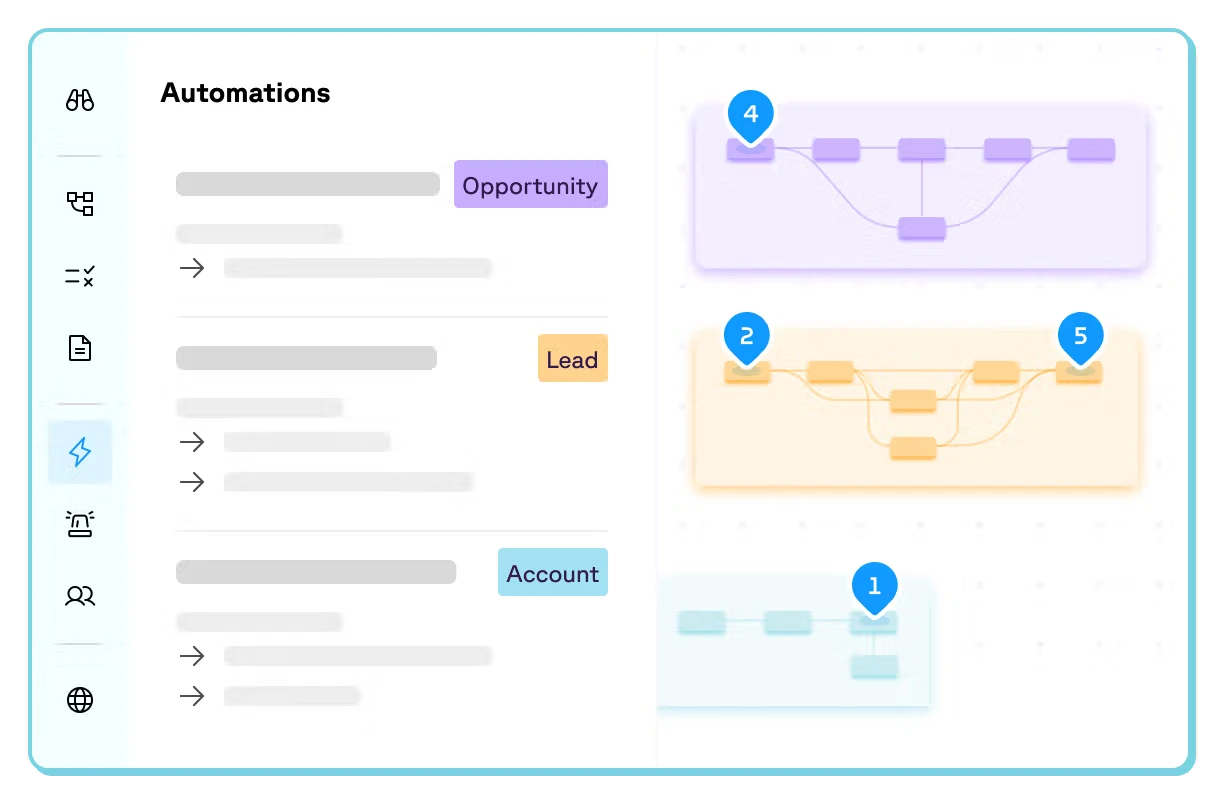
Sweep is a Salesforce automation and routing platform that’s designed for RevOps teams. It helps you manage lead distribution, territory logic, and workflow changes directly in Salesforce.
Key Features
- Rule-Based Routing: Direct leads by territory and assignment guidelines
- Workflow Automation Controls: Create and adjust routing logic through a visual workspace
- Operational Visibility: Get insights into what’s happening with routing activity and workflow changes
- Round Robin: Distribute leads evenly with weighted round robin and workload caps
Pricing
Sweep does not publicly list its pricing. The company offers a custom quote based on your workflow and monthly volume.
Pros
- It’s got strong Salesforce-focused automation capabilities beyond just routing
- Helpful for teams that are managing complex territory changes and process documentation
Cons
- It’s more operations-focused than routing-focused, so simpler routing needs may find it excessive
- Routing logic can require additional Salesforce customization for some use cases
G2 Rating
4.9/5 stars (38 reviews)
Best For
RevOps teams that need routing as part of a broader Salesforce automation and operational visibility platform.
Why Choose Sweep Over Chili Piper
Sweep gives RevOps teams a visual workspace for managing routing alongside automations and process documentation. If your team’s challenge is keeping complex territory management logic organized as your organization evolves, Sweep covers more of that ground.
The trade-off is undisclosed pricing; Sweep no longer publishes its starting price. Meanwhile, Chili Piper’s $15,000/year pricing for Routing & Scheduling is more transparent, although potentially expensive for routing-only needs.
7. Plauti
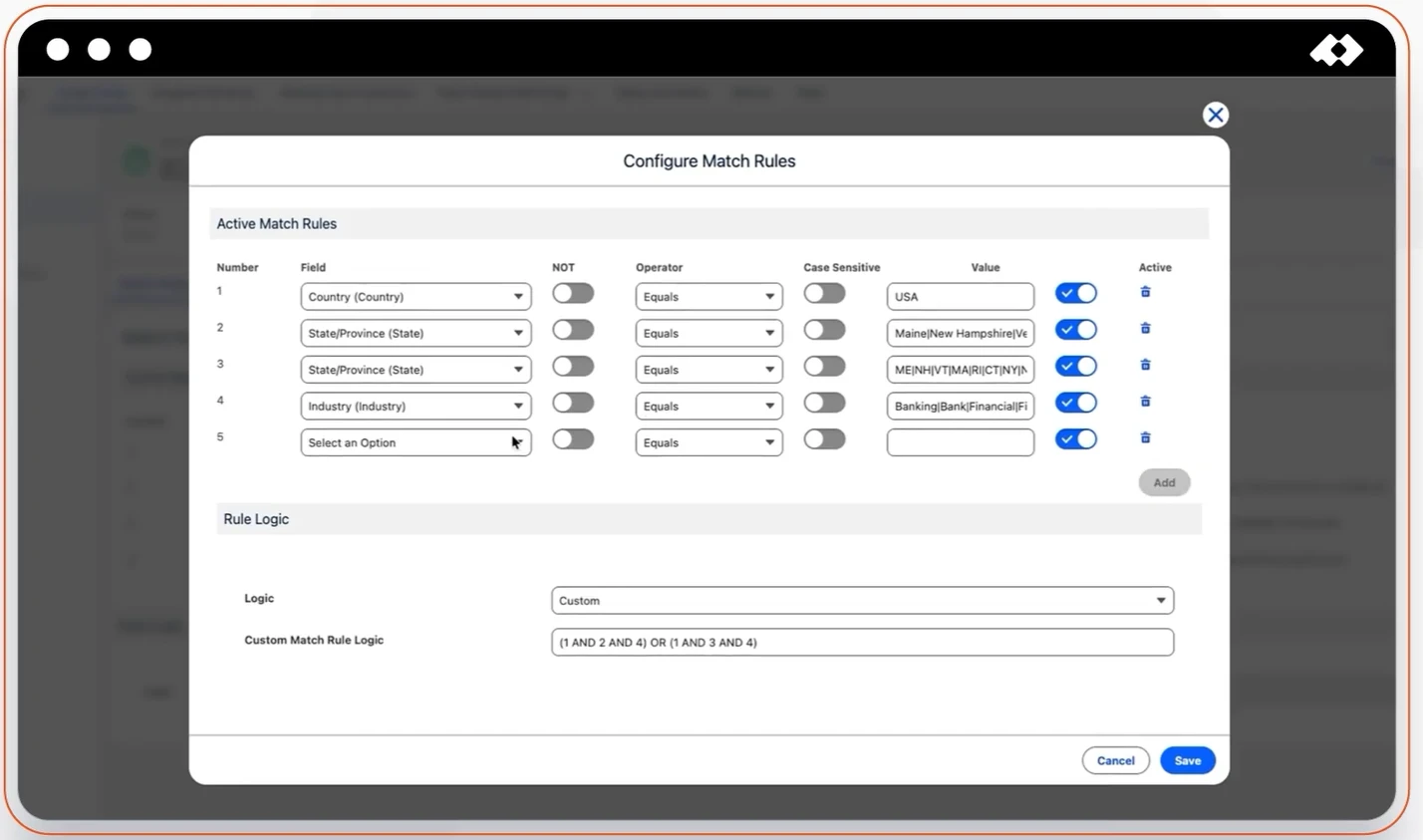
Plauti combines data quality tools with routing and assignment automation within Salesforce. It cleans, deduplicates, and standardizes your incoming lead data before routing records to the right rep.
Key Features
- Data Cleaning and Deduplication: Identify and merge duplicate records automatically
- Rule-Based Lead Routing: Route using territory, owner hierarchy, and custom filters
- Salesforce-Native Platform: Keep data secure and aligned with your org’s logic
- Automated Assignment Workflows: Set org’s rules once and assignments happen automatically
Pricing
Custom pricing based on team size, modules selected, and record volume processed. You’ll need to contact Plauti for a quote.
Pros
- It operates directly inside Salesforce without external middleware
- Gives you solid control over assignment conditions and routing logic
Cons
- Duplicate matching setup requires a solid understanding of your data structure
- There are a lot of configuration options, which can overwhelm teams with simpler routing needs
G2 Rating
4.5/5 stars (114 reviews)
Best For
Teams that need data deduplication and data quality management bundled with routing in one Salesforce-native platform.
Why Choose Plauti Over Chili Piper
Plauti combines record routing with data quality tools such as deduplication, helping teams clean and manage Salesforce data alongside assignment. Chili Piper focuses on routing and scheduling rather than data quality. If duplicates or inconsistent records affect your team’s routing, Plauti addresses data issues alongside assignment.
8. LeadAngel
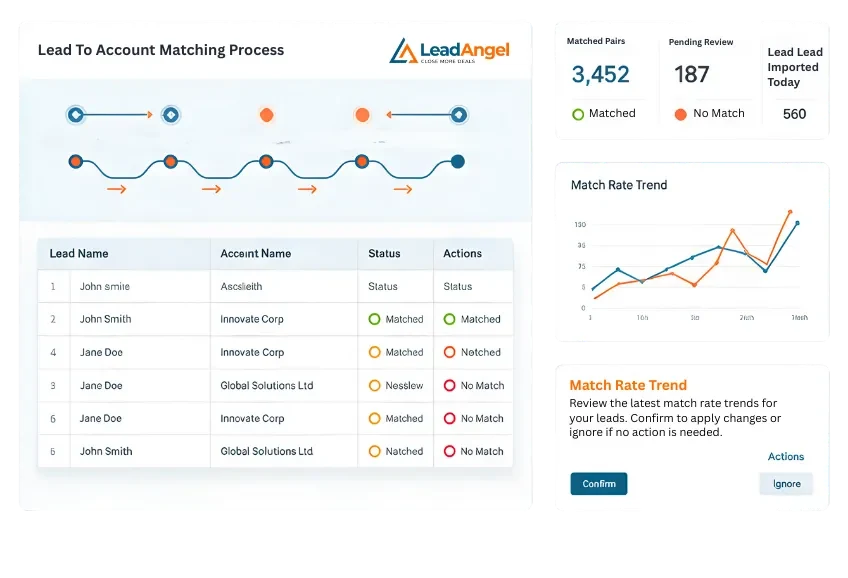
LeadAngel is a lead routing and engagement platform built to help sales and RevOps teams automate lead distribution, lead-to-account matching, and CRM data enrichment.
Key Features
- Automated Lead Routing: Route leads instantly based on geography, scoring, source, and custom criteria
- Lead-to-Account Matching: Match incoming leads with existing accounts and contacts, so they’re assigned properly
- Multi-Object Support: Route across leads, contacts, and accounts
- On-The-Spot Handoff: Transfer leads instantly between reps, whether it’s SDR to AE or across territories
Pricing
- Professional: Lead routing and two-way lead-to-account matching
- Professional Plus: Adds advanced routing across leads, contacts, accounts, and opportunities
You’ll need to contact them directly for pricing.
Pros
- Lead-to-account matching improves distribution accuracy, so you’ll see fewer misrouted records
- Flexible rules accommodate specific business needs and custom assignment logic
Cons
- You’ll need careful planning and testing to define advanced routing criteria
- There’s limited community support and documentation compared to more established tools
G2 Rating
4.5/5 stars (46 reviews)
Best For
Teams that prioritize lead-to-account matching accuracy and need smooth SDR-to-AE handoffs.
Why Choose LeadAngel Over Chili Piper
LeadAngel specializes in account-based routing, matching incoming leads to the right accounts before routing them. It also supports real-time SDR-to-AE handoffs, which Chili Piper only offers on its higher-priced tier, Experiences.
If routing leads to the right rep and rep handoffs are central to your workflow, LeadAngel puts those use cases at the core of its platform.
9. RevenueHero

RevenueHero is an inbound lead conversion and scheduling platform that’s built for B2B revenue teams. It integrates with Salesforce and other CRMs, so your routing decisions and meetings stay synced with your CRM data.
Key Features
- Automated Lead Routing: Route leads based on defined logic and qualification rules
- CRM Integration: Sync assignments, activities, and meetings back into your CRM in real time
- Qualification Logic: Apply routing based on lead score or predefined business rules
- Multi-Object Support: It’ll work with leads, contacts, and accounts
Pricing
They charge a fixed platform fee of $79/mo alongside the following:
- Inbound Essentials: $25/user/month
- Inbound Enterprise: $35/user/month
There isn’t a free trial, but you can request a demo.
Pros
- It combines automated lead distribution with instant meeting booking in one workflow
- Salesforce integration ensures routing and meetings stay aligned with CRM data
Cons
- It’s not Salesforce-native, so it runs as an external integration
- That external architecture adds setup complexity and additional platform fees
G2 Rating
4.8/5 stars (164 reviews).
Best For
B2B inbound teams that want routing and instant meeting booking in one workflow, and don’t need it to run natively inside Salesforce.
Why Choose RevenueHero Over Chili Piper
RevenueHero offers a similar routing-and-scheduling bundle at a lower entry price. Its inbound plans start at $25 per license per month, with a $79 per month platform fee. Chili Piper’s Routing & Scheduling starts at $1,250 per month for up to 15 seats, with additional seats at $45 each per month. If you need routing and scheduling together but find Chili Piper expensive, RevenueHero offers a lower-cost alternative.
10. ZoomInfo Operations

ZoomInfo Operations (formerly RingLead) is a RevOps and intelligence platform. It’s got lead routing and automated assignment as part of its broader operational suite.
Key Features
- Automated Lead and Territory Routing: Route by geography, source, and ownership rules
- Lead Scoring and Enrichment: Score and enrich leads with ZoomInfo’s data before they’re routed
- Ops Orchestration Tools: Align territories and standardize workflows across teams
- Multi-Object Support: Apply routing rules to leads, contacts, and accounts
Pricing
Custom pricing. Contact ZoomInfo sales for a quote.
Pros
- There’s a strong data quality layer that cleans and enriches leads before routing decisions are made
- Deep Salesforce integration with mass update and deduplication capabilities
Cons
- Lead routing isn’t the core product, so it’s more of a supporting feature
- The interface can feel overwhelming for new users, making initial setup time-consuming
G2 Rating
4.4/5 stars (354 reviews).
Best For
Teams already using ZoomInfo for data enrichment that want to add routing without bringing in a separate tool.
Why Choose ZoomInfo Operations Over Chili Piper
ZoomInfo Operations can enrich incoming records with contact and company data before routing them, giving reps more complete information from the start. Chili Piper focuses on routing and scheduling, not data enrichment.
If your team already uses ZoomInfo for prospecting and data management, OperationsOS extends that workflow into lead routing. The trade-off is that routing isn’t its central focus, so teams needing deep assignment logic may prefer a dedicated routing tool.
Selection Criteria
How We Evaluated
We compared each tool against what Salesforce teams actually need from a Chili Piper alternative. The biggest factor was whether routing runs natively inside Salesforce or through an external integration.
From there, we checked:
- Routing depth: Territory rules, skill-based assignment, workload balancing, round robin, and other routing logic
- Multi-object support: Whether teams can route leads, cases, opportunities, and custom Salesforce records
- Business-user configurability: How easily RevOps and sales teams can manage routing without admin support
- Additional capabilities: Lead-to-account matching, data enrichment, data quality, scheduling, AI prioritization, and workflow automation
- Overall fit: Whether added capabilities increase value or complexity for teams that primarily need assignment
- Pricing transparency: How clearly pricing is published, and costs add on
How to Choose
Start with what your team actually needs routing to do.
For getting leads and cases to the right rep quickly, Kubaru or Q-Assign are the most practical fit; both let business users manage the rules directly. If you also need lead-to-account matching or data quality, Traction Complete, LeanData, or Plauti bundle those capabilities with routing.
For enterprise teams running complex, multi-object workflows, LeanData is worth the longer implementation. If you need routing paired with meeting scheduling, RevenueHero offers a lower-cost alternative to Chili Piper.
Budget matters too. Kubaru’s flat $20 per user per month includes every feature, making costs easy to plan. LeanData and ZoomInfo don’t disclose pricing, but paying for their broader capabilities is harder to justify when routing is your main priority.
FAQs
What is the best Chili Piper alternative for Salesforce?
For teams that need Salesforce-native routing without paying for scheduling they won’t use, Kubaru’s the top pick. It runs entirely inside Salesforce, gives business users direct control over routing rules, and costs $20 per user per month with everything included. If you also need lead-to-account matching, Traction Complete and LeanData are worth evaluating.
Is Chili Piper good for Salesforce lead routing?
Chili Piper handles basic inbound lead routing well, especially if your team also needs meeting scheduling. But its routing runs through an external integration rather than natively inside Salesforce, and the Routing & Scheduling plan starts at $1,250 per month. If you need territory-based, skill-based, or workload-balanced routing across multiple objects, a dedicated routing tool may be a better fit.
How much does Chili Piper cost compared to alternatives?
Chili Piper’s Routing & Scheduling plan starts at $15,000 per year for 15 seats, with additional seats billed at $45 per user per month. Several alternatives cost significantly less for routing alone. Kubaru costs $20 per user per month with no platform fee, NC Squared starts at $20, and Traction Complete starts at $39.
Can I use a Chili Piper alternative for case routing, not just leads?
Yes. Several tools on this list route more than just leads. Kubaru, NC Squared, and Q-Assign all support case assignment alongside leads, accounts, opportunities, and custom objects. Chili Piper’s routing is focused on inbound leads tied to scheduling, so it doesn’t cover case routing.
Do I need a Salesforce-native tool, or will an integration work?
It depends on your security requirements and how much admin overhead you’re willing to manage. A Salesforce-native tool keeps your data inside your own environment and doesn’t add a new vendor to your security review. An external integration like RevenueHero can work well, but it adds a connection point you’ll have to maintain.
Put your routing inside Salesforce where it belongs
If your team runs on Salesforce and needs powerful, flexible lead routing without the complexity or unpredictable pricing, Kubaru’s worth evaluating. We’re 100% Salesforce-native, built so Sales Ops and RevOps teams can manage routing without IT or dev support.
We’ll route leads, cases, and opportunities to the right rep the moment they enter Salesforce. Territory, skill, workload, and round robin logic are built in.
Start your free 30-day trial on the Salesforce AppExchange, or book a demo with our team.