















Quick Summary
Distribution Engine vs Chili Piper is not quite apples to apples. Distribution Engine is a native Salesforce app that routes records to reps. Chili Piper is a scheduling-led platform that books inbound meetings the moment a form is submitted.
Kubaru stands beside Distribution Engine as a focused, flat-priced native router.
| Key Differentiators | Distribution Engine | Chili Piper | Kubaru |
|---|---|---|---|
| 100% Salesforce-native (managed package) | Yes | Integrated (external platform) | Yes |
| Data leaves Salesforce | No | Yes | No |
| Primary purpose | Record routing | Inbound scheduling + routing | Record routing |
| Routing logic (round robin, weighted, capacity) | Yes | Yes (Distro) | Yes |
| Instant meeting booking | No | Yes | No |
| Objects routed | Leads, cases, opps, custom | Any object (Distro) | Any object |
| Pricing | $20 to $55/user/mo (3 tiers) | Platform plans from $15k/yr | $20/user/mo (flat) |
| Implementation | Days | Days to weeks (two systems) | ~1 day |
| Rating | 4.9/5 stars (AppExchange) | 4.6/5 stars (G2) | 5/5 stars (AppExchange) |

Why Compare a Router and a Scheduler?
Speed-to-lead is unforgiving. The classic InsideSales.com lead response study found reps who called within five minutes were 21 times more likely to qualify a lead than reps who waited half an hour.
Both Distribution Engine and Chili Piper promise to protect that window, which is why buyers compare them. They just go about it differently.
Distribution Engine is dedicated lead routing software that assigns any record to the right owner inside Salesforce. Chili Piper is a demand conversion platform that qualifies and books inbound meetings in real time, with routing as part of the job.
That difference shapes everything below, from where your data lives to how you pay. Distribution Engine keeps records in Salesforce. Chili Piper runs its scheduling and web-form layer on its own platform.
We compare the two across features, ease of use, native fit, and pricing. Then we show where Kubaru fits as a focused native option.
How Do Distribution Engine and Chili Piper Compare Head-to-Head?
We line them up on the criteria that matter, keeping their different jobs in view.
Features and Routing
One tool routes records; the other turns form-fills into booked meetings.
Distribution Engine
Distribution Engine concentrates on assigning records well. Leads, cases, opportunities, accounts, contacts, and custom objects all flow through round robin, weighted, or territory rules, matched on skills, lead source, or account ownership.
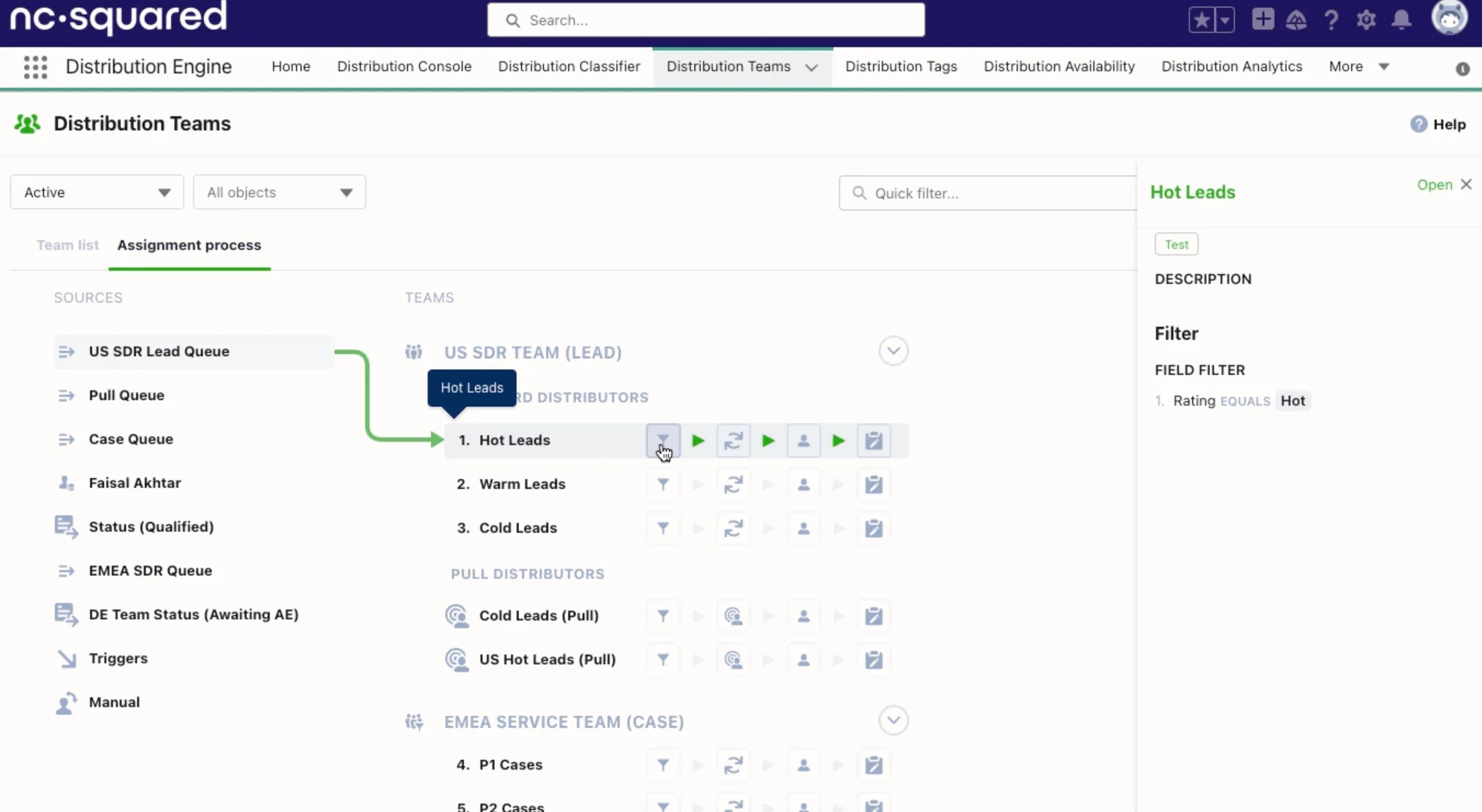
Its guardrails are practical: per-rep caps, load balancing, working hours, and out-of-office handling, with SLA-based reassignment for leads that sit too long. Managers watch it all through live consoles, and a simulator tests rule changes safely.
Chili Piper
Chili Piper is built around instant inbound conversion. The platform spans five products: Concierge for form scheduling, Chat for AI qualification, Distro for routing, Handoff for SDR-to-AE booking, and ChiliCal for calendaring.
Distro is a genuine router. It offers strict, flexible, and weighted round robin, territory and ownership rules, and a working-hours mode, and it can route any standard Salesforce object.
The standout remains Concierge, which qualifies a form-fill and books the meeting while the prospect is still on the page.
The gap is center of gravity. Distribution Engine treats routing as the whole job. Chili Piper treats routing as one step toward a booked meeting, and its platform pricing reflects that wider ambition.
Ease of Use
Both take setup work, but the work looks different.
Distribution Engine stays admin-friendly. No Apex or Flow is needed, teams typically go live within days, and the rules live on Salesforce objects your admins already know.
Chili Piper spans two systems. Salesforce holds the OAuth connection and an optional managed package, while routers, meeting types, and distribution rules live in Chili Piper's own workspace. Reviewers call the routing UI powerful but fiddly to audit.
Expect an admin-intensive rollout measured in days to weeks, depending on how complex your Salesforce setup is.
Salesforce-Native Fit
This is where the two diverge most sharply.
Distribution Engine is a pure AppExchange managed package. Records never leave your org, and reporting runs on native objects, so dashboards just work.
Chili Piper is an external platform connected through OAuth. Its optional managed package adds fields and reports, but routing logic executes in Chili Piper's cloud, and form and scheduling data pass through it.
For regulated industries like finance, healthcare, and insurance, that gap matters. Chili Piper's cloud layer can add steps to a security review.
Pricing Model
The pricing models are as different as the products.
Distribution Engine
Three published tiers, billed annually with a five-license minimum: Starter at $20 per user monthly, Advanced at $35 with territory routing and lead matching, and Unlimited at $55 with API access and pull routing.
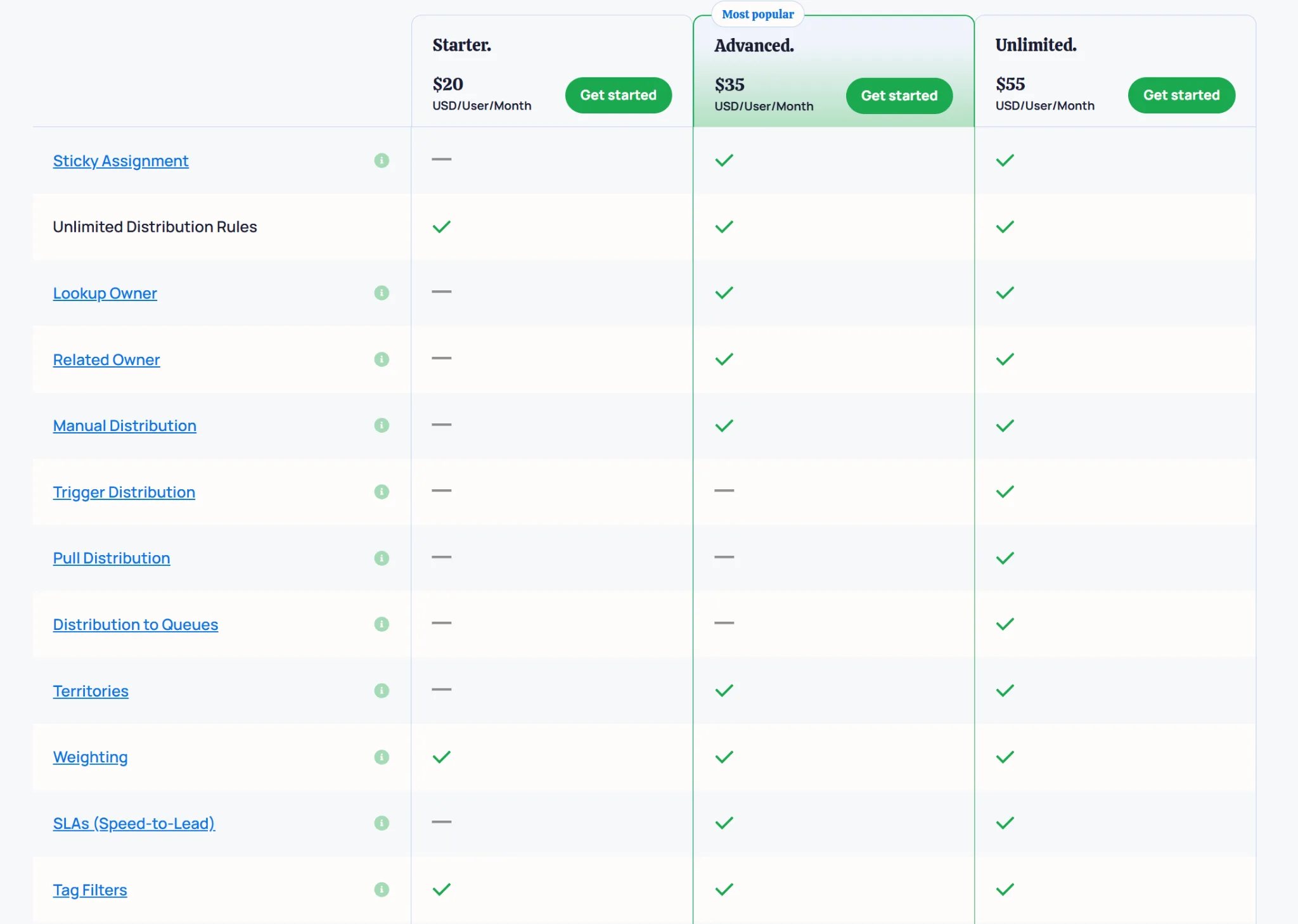
Premier Support adds roughly 20%, and there is a 30-day free trial. Our Distribution Engine pricing guide runs the full numbers.
Chili Piper
Chili Piper dropped per-user pricing in 2026 and now sells platform plans. Routing & Scheduling starts at $15,000 a year with 15 seats included, and the Experiences plan starts at $42,000.
Extra seats run $45 to $50 each per month, and metered AI credits cover visitor identification, chat, and routing actions, so high-traffic sites pay more. There is no self-serve trial, only a demo.
At a $15,000 floor, small teams are effectively priced out.
Which Should You Pick?
Pick Distribution Engine if...
- You need to route any record, not just inbound forms
- You want everything to stay inside Salesforce
- Predictable per-user pricing suits your budget
It will not book meetings from web forms, but that is not its purpose. For routing records reliably, it stays lean, native, and a solid choice.
Pick Chili Piper if...
- Inbound speed-to-lead is your top priority
- You want to qualify and book meetings from forms instantly
- You have the budget for a $15,000-plus platform plan
Chili Piper leads on instant booking. Just remember it centers on inbound, and its cost and setup scale with it.
Pick Kubaru if...
You want native routing that covers every record, at a price you can predict. Kubaru lives entirely in Salesforce and focuses on one thing: assignment.
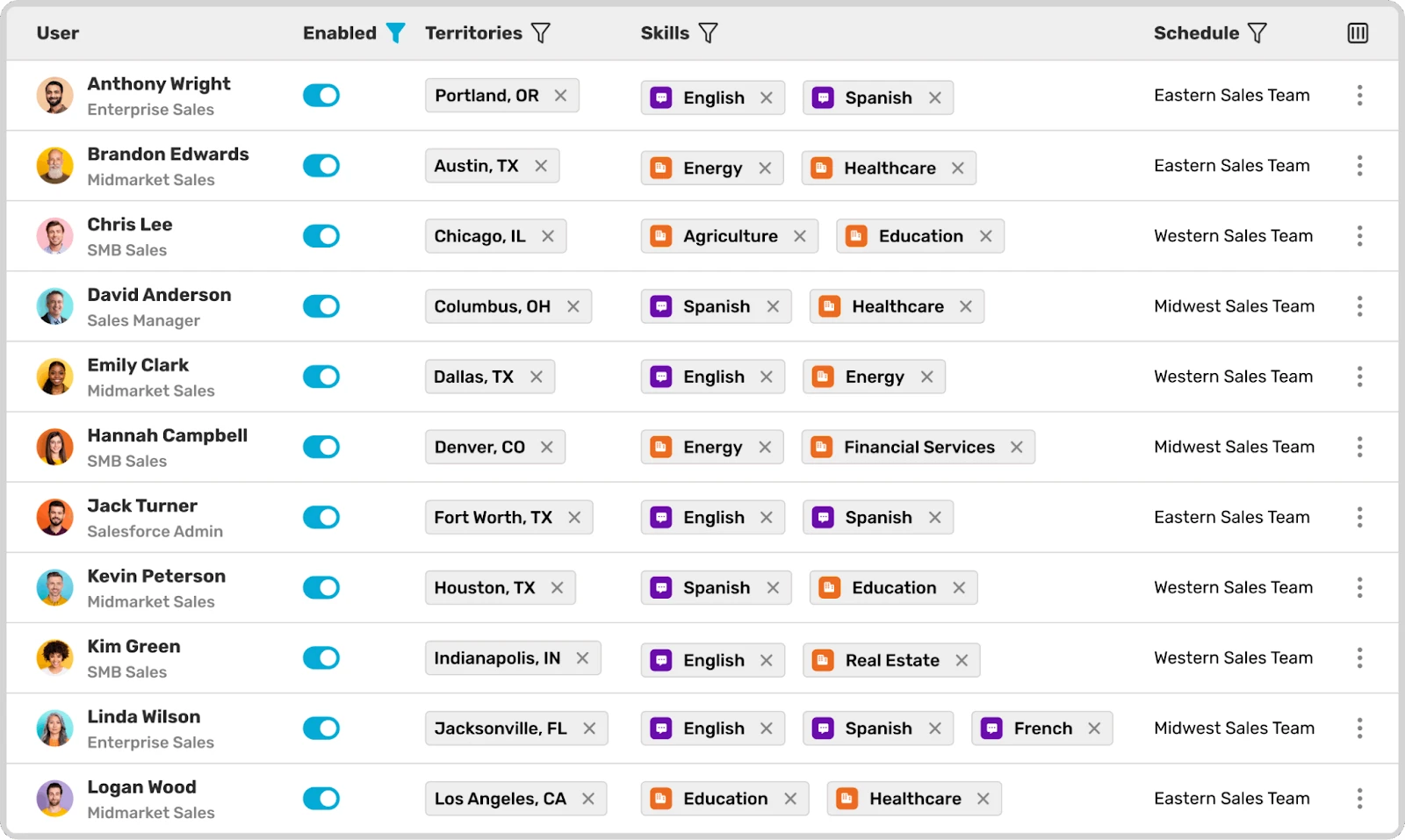
Everything comes in a single plan at $20 per user each month:
- Round robin, weighted, and territory routing
- Skill-based logic and load balancing
- Availability-aware and automated reassignment
- Duplicate matching
No modules to stack and no platform fees.
Your data never leaves Salesforce, so security reviews stay simple. Setup takes an afternoon, and onboarding and lifetime support cost nothing.
Kubaru routes records deeply and cleanly. If inbound scheduling is also a priority, many teams pair a focused router with a dedicated booking tool.
For an in-depth examination of all three options, have a look at our comparison page to see if Kubaru is the right fit for your team.
Frequently Asked Questions
Is Chili Piper a routing tool or a scheduling tool?
Both, but scheduling comes first. Distro can route any standard Salesforce object, though the platform is built and priced around converting inbound form-fills into meetings.
Does Chili Piper keep data inside Salesforce?
Not entirely. It connects through OAuth and an optional managed package, but routing executes on its platform, and form and scheduling data pass through its cloud. Distribution Engine and Kubaru stay fully native.
Which one is more affordable?
Distribution Engine for most teams. Its tiers run $20 to $55 per user, while Chili Piper's platform plans start at $15,000 a year plus seat and AI credit costs.
Can Distribution Engine book meetings?
No. It routes records to the right rep. For instant meeting booking, you would add a scheduling tool or choose Chili Piper for that specific need.
What is the simplest native alternative?
Kubaru routes any record natively for a flat $20 per user each month, with free onboarding and support and a 30-day trial of every feature.