















Quick Summary
LeanData is the better pick if you need complex routing logic with deep lead-to-account matching inside Salesforce. Sweep is the better pick if you want routing bundled with broader Salesforce admin tooling and faster setup. If routing is your only priority, Kubaru gives you deeper assignment features at $20/user/month with no tier gates.
LeanData vs Sweep: How Do They Compare?
Once your team outgrows Salesforce’s native assignment rules, choosing a routing tool gets harder than it should be. LeanData and Sweep are two of the best-known options, but they approach the problem from different angles.
LeanData is built for teams that need tighter control over routing, matching, and ownership inside Salesforce. Sweep includes routing too, but wraps it into a broader platform for territory changes, deduplication, and Salesforce admin work.
Below, we break down both tools across routing features, pricing, and ease of use, so you can decide which one fits your team… or whether a simpler, more affordable option is the better call.
Why Listen to Us?
Kubaru is a Salesforce-native routing app used by over 300 teams to automate lead, case, and record assignment.
We work with companies like Genesys, Paylocity, and AXA Health, and we’ve seen firsthand how teams evaluate routing tools, what matters during rollout, and where the common tradeoffs show up between platforms like LeanData and Sweep. This guide is based on that experience.
LeanData vs Sweep vs Kubaru: Side-by-Side
| What matters | LeanData | Sweep | Kubaru |
|---|---|---|---|
| Primary focus | Revenue orchestration built around routing, matching, and GTM workflow control | Salesforce operations platform that includes routing, documentation, and admin tooling | Dedicated Salesforce routing and assignment automation |
| Routing depth | Strongest for complex routing. Visual builder with decision branches, enrichment waits, round robin, and testing. | Easier to set up. No-code builder with round robin, load balancing, and AI-assisted recommendations. | Deep routing with round robin, weighted distribution, skills, territories, workload, availability, and SLA enforcement. |
| Matching and deduplication | Strong lead-to-account matching with fuzzy logic and 95%+ reported accuracy | Deduplication and matching built into the routing workflow | Duplicate matching to route related records to the same rep. Full deduplication requires a separate tool. |
| Object support | Tier-gated. Leads only on Standard, custom objects on Premium. | Tier-gated. Standard objects on Growth, custom objects on Scale. | Any standard or custom Salesforce object on a single plan. |
| SLA enforcement | SLA tracking available | SLA tracking available | Multiple SLAs per record, escalation actions (notifications, field updates, reassignment, pausing assignments), and an on-record SLA panel. |
| Meeting scheduling | Available through BookIt (paid add-on) | Not included | Not included |
| Salesforce-native | Yes, fully native | Hybrid. Routing runs in Salesforce, but the workspace layer sits outside it. | Yes, 100% native. No data leaves the org. |
| Pricing | Per-user, tiered. Last disclosed $39–$59/user/month, plus add-ons and implementation fees. | Flat monthly. Growth at $1,000/month, Scale at $2,000/month, Enterprise custom. | $20/user/month. All features included, no tiers or add-ons. |
| Free trial | No | Limited free tier on AppExchange | 30 days, full feature access |
| Setup effort | Heavier. Often 6–8 weeks with admin or consultant support. | Faster. Most teams go live in under 30 days. | Fast. Setup takes minutes, not weeks. |
| Best for | Enterprise teams with complex routing and matching needs | Teams that want routing plus broader Salesforce admin support | Teams that need focused, full-featured routing at a predictable price |

What Is LeanData?
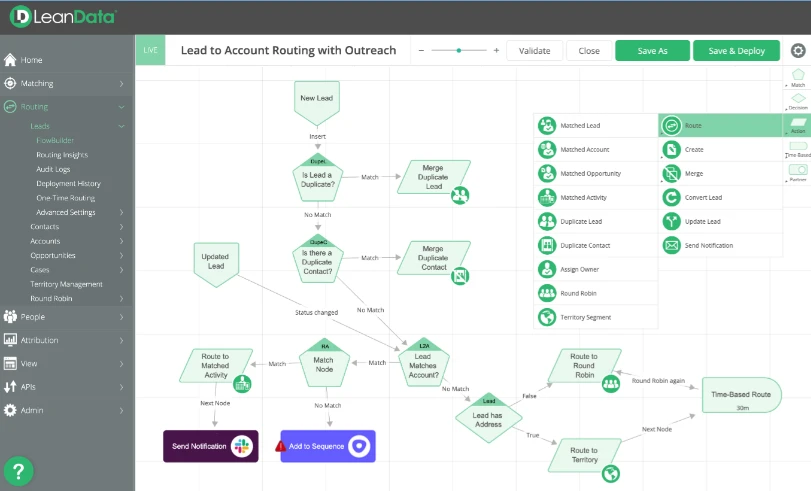
LeanData is one of the most established names in the Salesforce routing space. It’s a revenue orchestration platform that combines lead routing, lead-to-account matching, meeting scheduling (via BookIt), and integrations with tools like 6sense, Outreach, and Salesloft.
Its drag-and-drop FlowBuilder lets admins create multi-step routing logic with decision nodes, enrichment waits, and round-robin assignment. If records need to be assigned based on multiple fields, account relationships, or complex handoff rules, LeanData gives you the room to build for that.
Strengths
- Visual FlowBuilder with decision branches, enrichment waits, and testing
- Lead-to-account matching with fuzzy logic and 95%+ reported accuracy
- Broad integration ecosystem (6sense, Outreach, Salesloft, Slack, Clearbit, Cognism, and more)
- Fully Salesforce-native, so routing logic and audit trails stay inside the org
- Strong fit for enterprise ABM motions with buying group support
Weaknesses
- No published pricing. Last disclosed rates were $39–$59/user/month, but add-ons (BookIt, NotifyPlus) and implementation fees (typically 15–25% of the annual license) can push costs well above that.
- Steep learning curve. Implementation often takes 6–8 weeks with admin or consultant support.
- Object coverage is tier-gated. Leads only on Standard, custom objects require Premium.
- No free trial before committing budget.
G2 Rating
4.6/5 stars (990+ reviews)
What Is Sweep?
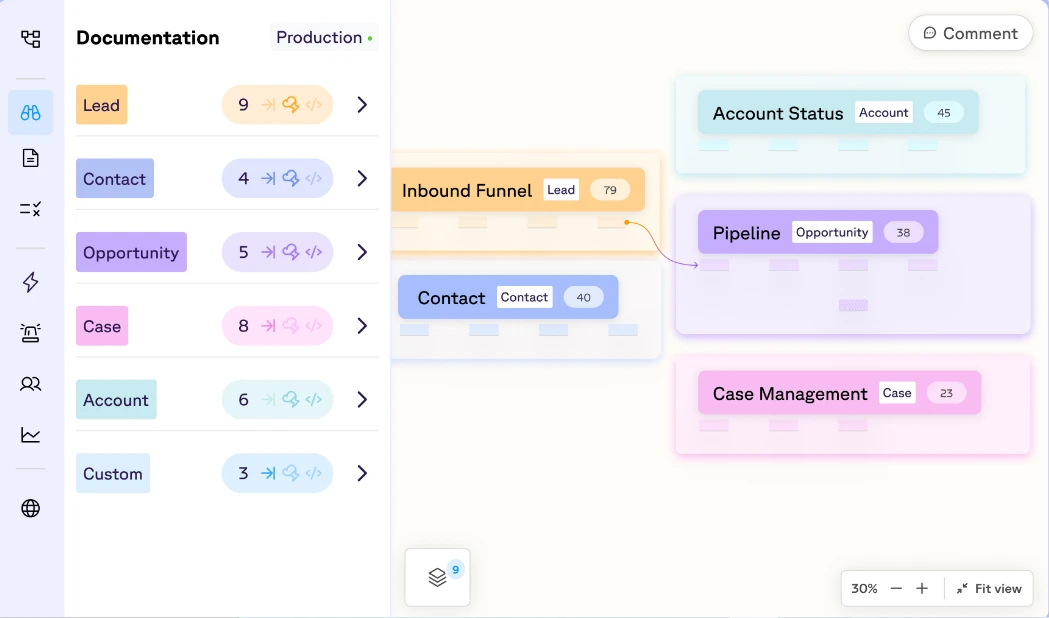
Sweep is an AI-powered workspace that sits on top of Salesforce (and now HubSpot). It combines lead routing, deduplication, territory management, Slack alerts, visual process mapping, and AI-driven documentation into a single platform.
Its no-code builder makes routing rules faster to set up than LeanData’s FlowBuilder, and the broader workspace handles territory updates, metadata governance, and process documentation alongside routing. For teams with limited admin bandwidth, that consolidation can save real time.
Strengths
- Faster to set up. Most teams go live in under 30 days.
- No-code routing with AI-assisted recommendations
- Visual workspace for mapping Salesforce objects, automations, and dependencies
- Built-in deduplication and matching inside the routing workflow
- Territory management with automated reassignment when teams or geographies change
- Responsive support team consistently praised in G2 reviews
Weaknesses
- At $1,000–$2,000/month, it’s priced as a platform, not a routing tool.
- Custom object routing requires the Scale plan at $2,000/month.
- Not fully Salesforce-native. The workspace layer lives outside Salesforce, even though routing operates within it.
- G2 reviewers flag issues ordering Sweep automations alongside Salesforce Flow automations, and error logging is described as insufficient.
- Advanced Salesforce customization still requires native tools, meaning some teams maintain rules in two places.
G2 Rating: 4.9/5 stars (33 reviews)
Where They Differ Most
Routing Depth
LeanData gives you more control over how records move through Salesforce. You can build detailed routing paths, hold records until key data is filled in, balance workloads more precisely, improve lead-to-account matching before assignment, and trace what happened when routing breaks.
Sweep takes a simpler approach. Because routing sits alongside territory updates, deduplication, and Slack-based actions, it can be easier to manage as your team changes and your Salesforce setup grows. The tradeoff is less granular control over how individual records are routed.
Bottom line: Choose LeanData if you need more control and can support a more complex setup. Choose Sweep if you want routing to be easier to manage day to day.
Pricing
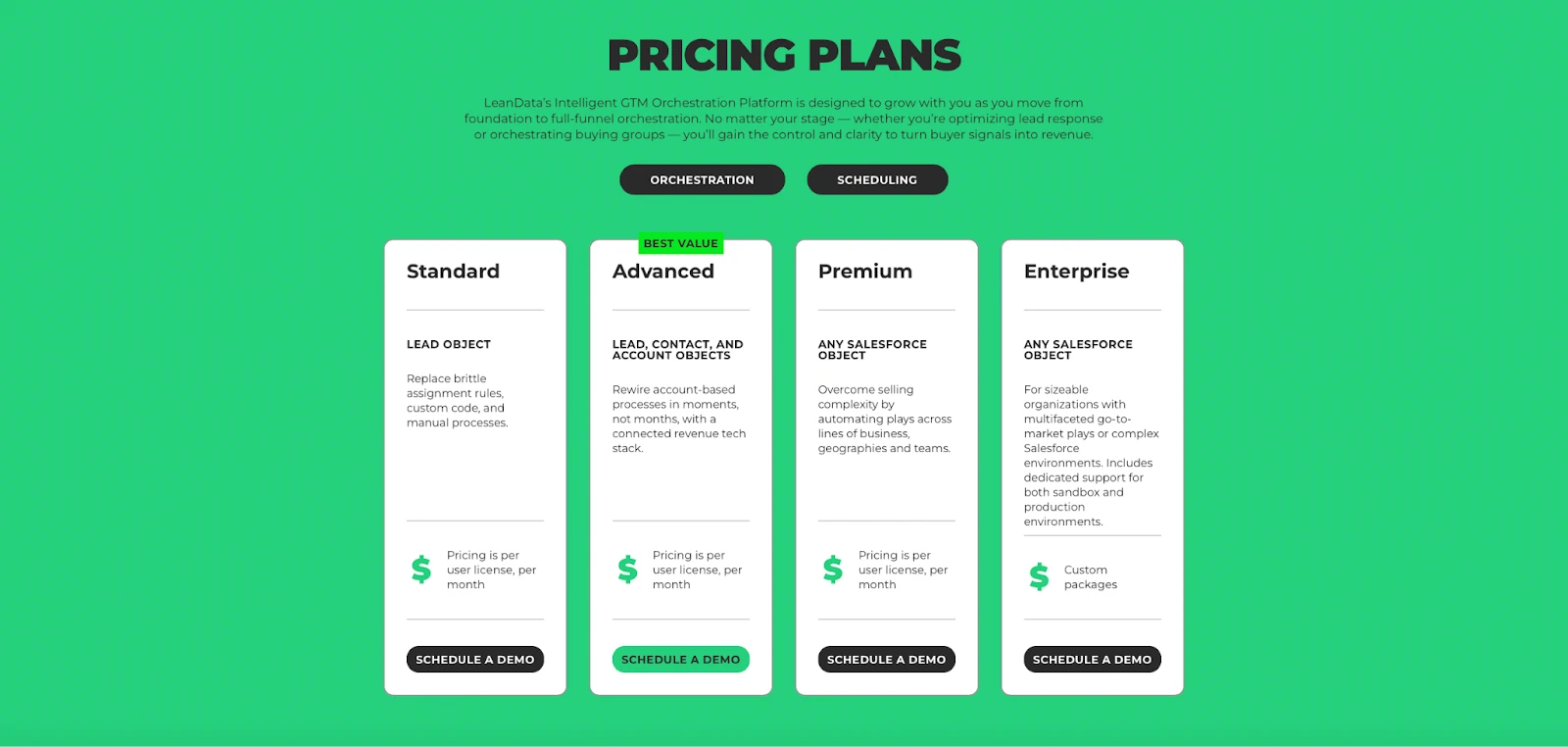
LeanData is harder to budget for upfront because it no longer publishes pricing. Based on third-party data, LeanData pricing ranges from $39–$59/user/month, but that’s usually the starting point. Higher tiers for broader object support, add-ons like BookIt and NotifyPlus, and implementation fees all push the real cost higher.
Sweep publishes its pricing, which makes budgeting easier from the start:
- Growth ($1,000/month): Two admin licenses, five application users, standard objects only.
- Scale ($2,000/month): Five admin licenses, ten application users, any Salesforce object.
- Enterprise (custom): For organizations with 1,000+ Salesforce licenses.
Growth only covers standard objects and five application users, so costs rise quickly if your team is larger or your routing setup is more complex.
Bottom line: LeanData tends to cost more, and more of that cost surfaces after the sales process starts. Sweep is easier to budget for, but it can still get expensive if you outgrow the included users or need custom object support.
Setup and Ease of Use
LeanData’s implementation often takes 6–8 weeks, usually with admin or consultant support. Users like the control they get from FlowBuilder, but ongoing changes can bottleneck around the person who knows the routing logic best.
Sweep gets teams live faster, with most going live in under 30 days. That makes it easier to manage if your team is small, your admin bandwidth is limited, or you need routing in place without turning the rollout into its own project.
Bottom line: LeanData gives you more depth once it’s in place. Sweep usually gets you there with less lift.
Salesforce-Native Fit
LeanData is fully Salesforce-native. Routing logic, record activity, and audit trails all stay inside Salesforce. That makes security reviews easier and gives teams more confidence in regulated industries.
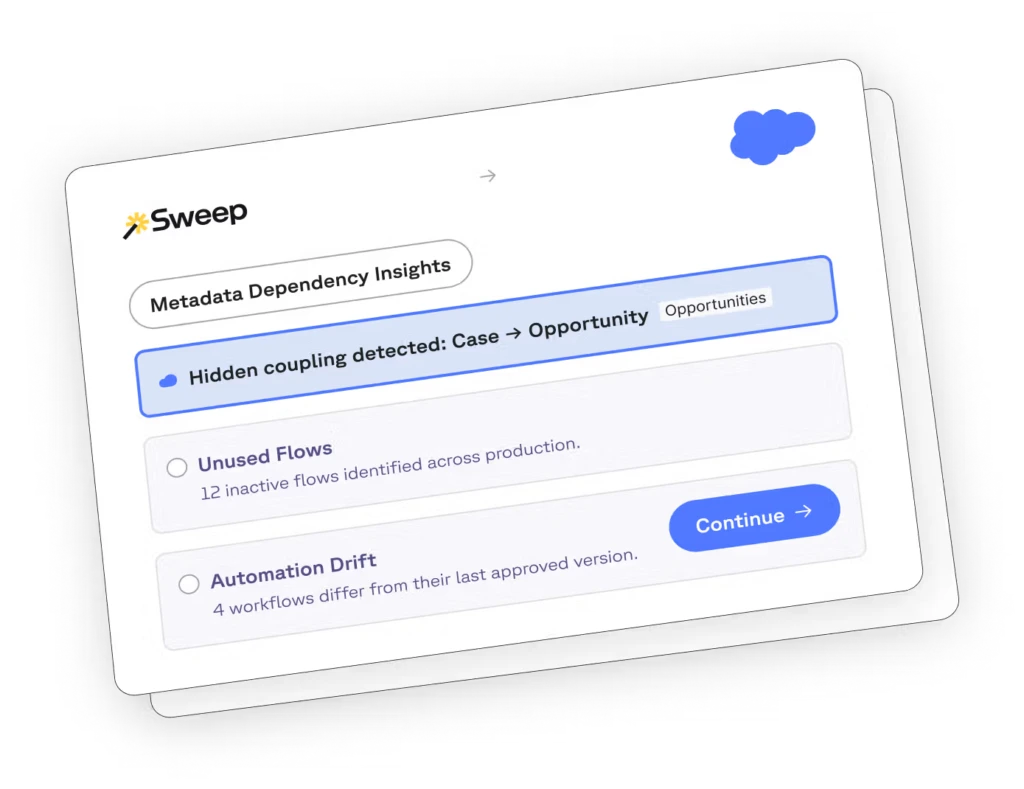
Sweep uses a hybrid model. Routing rules can run in Salesforce, but the broader workspace for documentation, metadata, and admin tooling lives outside it. For some teams, that’s a reasonable tradeoff. For others, it’s a dealbreaker.
Integrations
LeanData has the more established ecosystem. It connects with 6sense, Outreach, Salesloft, Slack, Microsoft Teams, Clearbit, Cognism, UserGems, Crossbeam, and Salesforce Sales Engagement. That gives you more ways to trigger routing from intent or enrichment data.
Sweep covers the basics with native integrations for Salesforce, HubSpot, Slack, and Microsoft Teams. That may be enough if your routing setup is fairly contained. If your process depends on a wider GTM stack, the gaps are more noticeable.
Which One Should You Pick?
Choose LeanData if…
- Your routing logic is complex enough to justify a heavier setup
- Lead-to-account matching is critical to your process
- You need deep integrations with your GTM stack (6sense, Outreach, Salesloft, etc.)
- You have dedicated admin resources to manage and maintain the system
Choose Sweep if…
- You want to get live faster with less admin overhead
- You want routing, territory management, and documentation in one tool
- Your team is small and doesn’t need granular control over every routing path
- You’re comfortable with a hybrid Salesforce setup
Both tools work well for what they’re built to do.
But they’re both built to do more than just routing. If your team’s main goal is getting records to the right person quickly and fairly, the extra platform may not be where you want to spend your budget.
When Neither Is the Right Fit: Why Kubaru Works for Routing-First Teams
LeanData and Sweep are broader platforms. They can handle routing, but they also bring in revenue orchestration, territory management, documentation, or admin tooling that adds cost and complexity.
If your main goal is to route records accurately, quickly, and without extra overhead, Kubaru takes a different approach. Our platform is built specifically for automated assignment inside Salesforce, which means more of the product is focused on the routing problems your team is actually trying to solve.
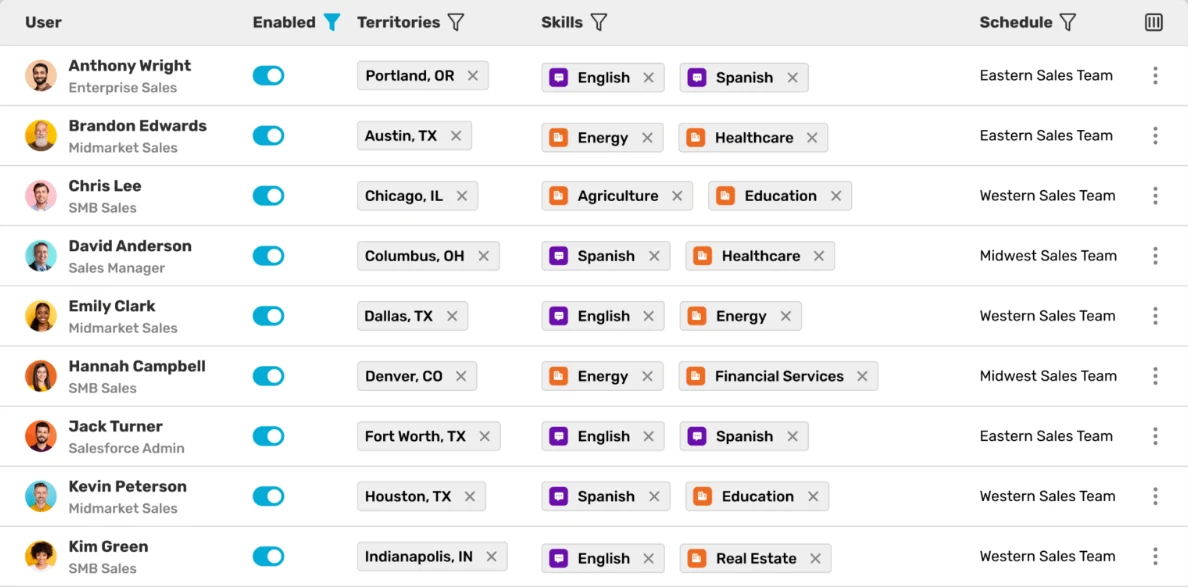
You can route leads, cases, opportunities, tasks, and any other object using skills, territories, workload, availability, and weighted round robin, while giving business users direct control without relying on admin support for every change.
What that looks like in practice:
- Any Salesforce object on a single plan. No tier gates for custom objects, unlike LeanData (Premium) or Sweep (Scale).
- SLA enforcement that goes deeper. Multiple SLAs per record, escalation actions (notifications, field updates, reassignment, pausing assignments), and an on-record SLA panel for tracking.
- Business users can manage rules themselves. No waiting on admins or consultants to update routing logic.
- Automatic reassignment so records don’t sit untouched.
- Clear assignment logs so you can see what happened and why.
- $20/user/month, all features included. No tiers, no add-ons, no implementation fees.
- Free onboarding and lifetime support with every account.
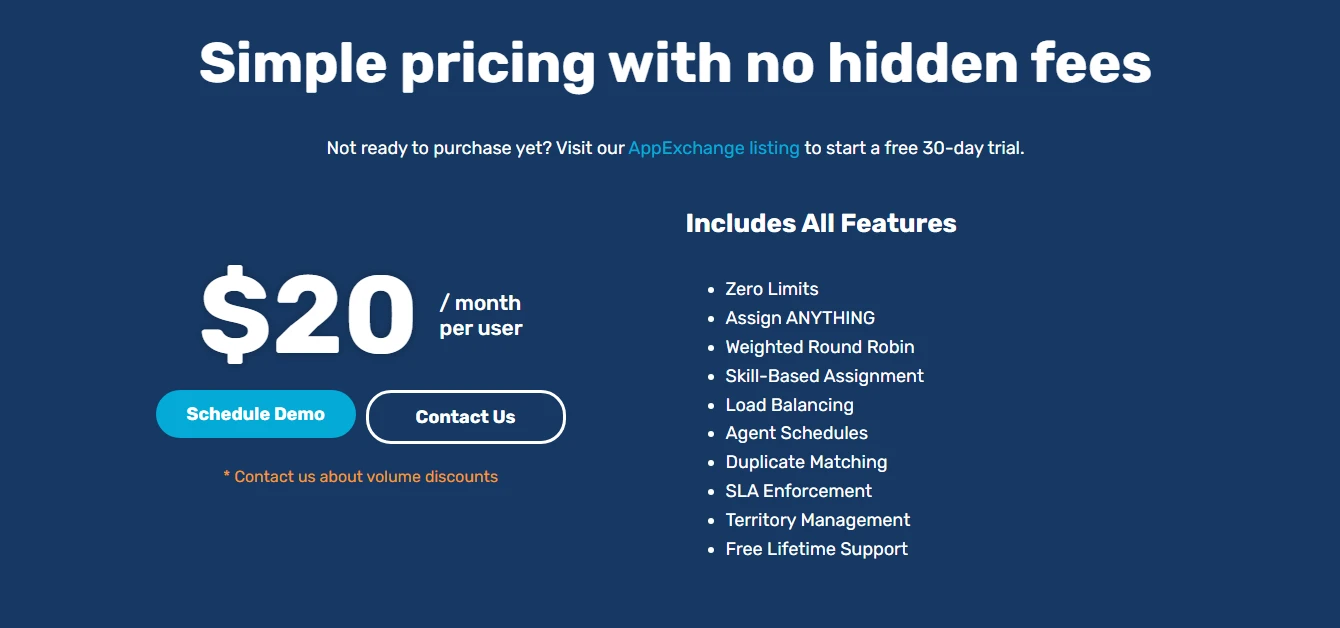
Kubaru is 100% Salesforce-native, supports unlimited assignment rules, and costs less than half the price of competitors like LeanData.
Start Your Free Trial Today
Start with a free 30-day trial and see how Kubaru handles routing inside Salesforce.
Onboarding is included, support is free for the life of your account, and the product is built to help you cut admin work, speed up response times, and make routing changes without waiting on IT.