















Quick Summary
LeanData vs Plauti boils down to a comparison of two very different toolkits. LeanData is a revenue orchestration platform that routes and matches leads across a complex funnel. Plauti is a native data-quality suite where routing sits beside deduplication and verification.
Kubaru is the focused, flat-priced router that handles assignment and nothing else.
| Key Differentiators | LeanData | Plauti | Kubaru |
|---|---|---|---|
| 100% Salesforce-native (managed package) | Yes | Yes | Yes |
| Data leaves Salesforce | No | No (optional cloud mode) | No |
| Primary purpose | Revenue orchestration | Data quality + routing | Record routing |
| Routing logic (round robin, weighted, capacity) | Yes | Yes (Plauti Assign) | Yes |
| Lead-to-account matching | Advanced (category-leading) | Via dedup engine | Included |
| Data-quality tools (dedup, verify) | Limited | Core strength | Duplicate matching |
| Pricing | Quote-only (typically $22k+/yr) | Quote-only (modular) | $20/user/mo (flat) |
| Implementation | 4 to 8 weeks | 2 to 6 weeks | ~1 day |
| Rating | 4.9/5 stars (AppExchange) | 4.5/5 stars (G2) | 5/5 stars (AppExchange) |

Why Compare a Platform and a Suite?
Salesforce assignment rules cover the basics and stop there. They exist only for leads and cases, cap out at 3,000 rule entries per rule, and have no grip on workload or availability.
Teams that need more start weighing dedicated routing tools. LeanData and Plauti answer that need, but from two different directions.
LeanData wraps routing inside lead routing software built for revenue orchestration, adding matching, scheduling, and signals. Plauti wraps routing inside a data-quality suite, next to deduplication, validation, and record cleanup.
Neither is a pure router, and both keep data inside Salesforce. That native footprint is welcome news for finance, healthcare, and insurance teams.
The real question is which surrounding toolkit you actually need, and how much you will pay for the parts you do not.
We compare the two across features, ease of use, native fit, and pricing. Then we show where Kubaru fits as the focused option.
How Do LeanData and Plauti Compare Head-to-Head?
We line them up on what buyers weigh, remembering that routing is only one slice of each tool.
Features and Routing
Both route records, but each surrounds routing with a different mission.
LeanData
LeanData folds routing into full-funnel orchestration. Records travel through FlowBuilder graphs that branch on any condition, catch duplicates along the way, and hand off to scheduling or signal-driven follow-up in the same flow.
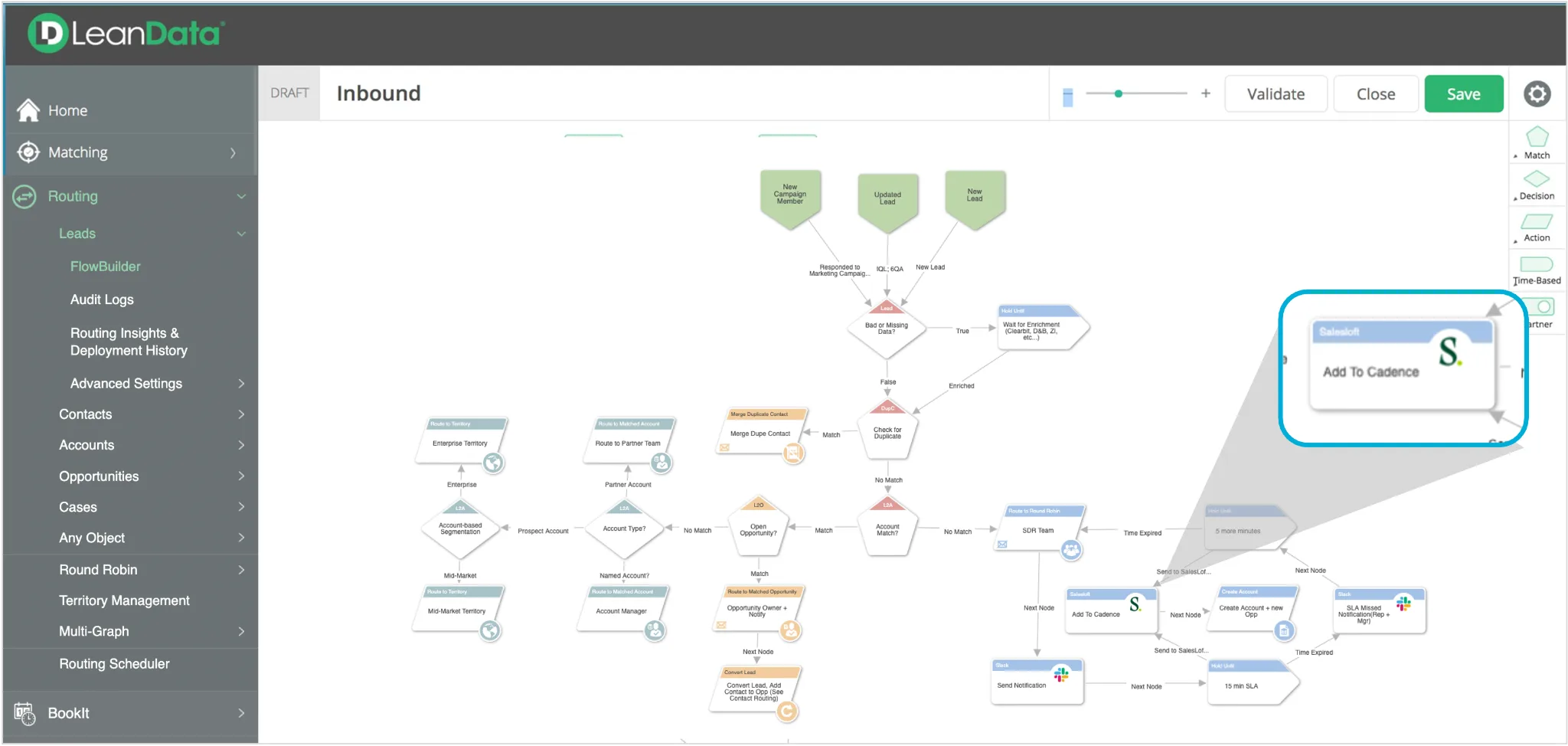
Matching is where it earns its reputation. G2 maintains an entire category for lead-to-account matching and routing, and LeanData sits at the top of it.
Coverage widens with the edition:
- Leads on Standard
- Contacts and accounts on Advanced
- Everything, including custom objects, on Premium
BookIt scheduling and several other modules are paid add-ons.
Plauti
Plauti routes through Plauti Assign, the former Super Round Robin app it acquired and folded into its suite. Assign is a more serious router than its side-module status suggests.
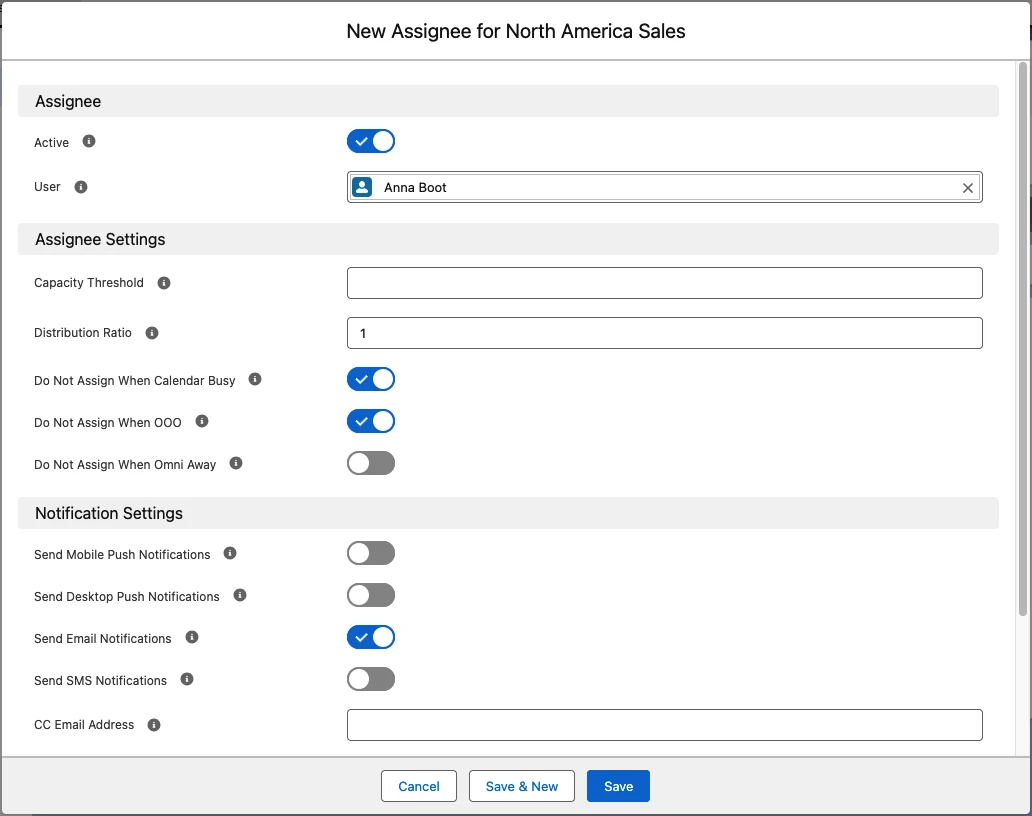
It covers round robin, weighted distribution, load balancing, capacity caps, working hours, out-of-office, and skills and territory rules, with SLA-based reassignment, across any standard or custom object. It even reads Omni-Channel presence when judging availability.
Around it sit the data-quality tools: Deduplicate, Verify, Manipulate, and Restore. Matching runs through the dedup engine, comparing fields like email domain against account websites with 25-plus fuzzy algorithms.
The split is direction, not just depth. LeanData surrounds routing with orchestration and scheduling. Plauti surrounds it with data hygiene. Your pick depends on which problem is louder.
Ease of Use
Setup effort tracks how much platform sits around the routing.
LeanData's breadth asks for a dedicated owner. Typical rollouts run four to eight weeks with professional services, and reviewers say maintaining its graphs needs a specialist admin or RevOps resource.
Plauti stays closer to a Salesforce admin's comfort zone. Assign typically deploys in two to six weeks, module by module, and Plauti pitches its logic as admin-maintainable without consultants.
Some reviewers still find the volume of configuration options overwhelming at first.
Salesforce-Native Fit
Both are true managed packages, so this round stays close.
LeanData's core routing is fully native, with small caveats: its AI graph summaries run on a Google Gemini integration, and BookIt touches external calendars.
Plauti processes records natively by default and leans hardest into the in-org message, which resonates with data-governance teams. One nuance: Deduplicate offers an optional Plauti Cloud mode for offloading heavy duplicate jobs.
Pricing Model
Neither publishes a clear price, and both scale by what you add.
LeanData
LeanData sells per-user licenses in three quote-only editions. Reported contracts center on $22,722 a year per Vendr, and smaller teams are often quoted $25,000 to $50,000 to start.
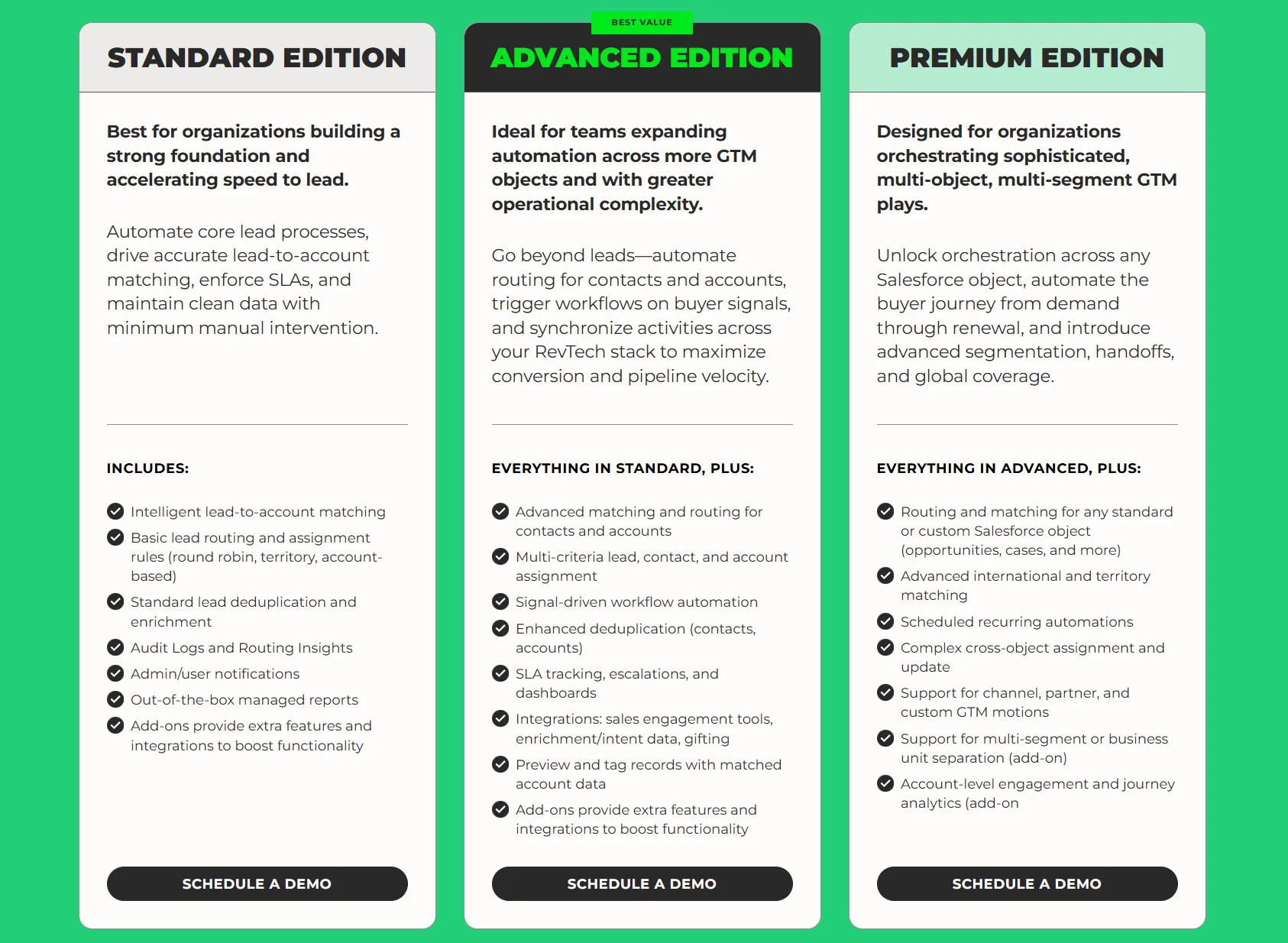
The add-on list (BookIt, Multi-Graph, NotifyPlus), 10 to 20% for premium support, and separate implementation fees all push the number up. Renewal jumps often start the search for alternatives. Our LeanData pricing guide covers what buyers report.
Plauti
Plauti quotes custom pricing per product, shaped by team size, objects routed, and any bundling with its other tools. Routing does not require licensing the whole suite, and sandbox licenses and support come included.
There are 14-day trials for Deduplicate and Verify, which is more than most quote-only vendors offer. Our Plauti pricing guide breaks down the plans.
Which Should You Pick?
Pick LeanData if...
- You orchestrate complex journeys across several teams
- Category-leading lead-to-account matching is essential
- You want routing, matching, and scheduling in one platform
- You have an enterprise budget and a RevOps owner
LeanData justifies its price at scale. Below that, much of the platform and its cost can sit idle.
Pick Plauti if...
- Data quality is your primary problem to solve
- Deduplication and validation matter as much as routing
- You want everything handled natively inside Salesforce
- Routing can ride along with a broader data toolkit
Plauti shines on clean data, and Assign is stronger than most suite add-ons. If routing rides along with a data-quality push, it is a solid fit.
Pick Kubaru if...
You want routing done deeply, without buying an orchestration platform or a data-quality suite to get it. Kubaru is native to Salesforce and built for one job: assignment.
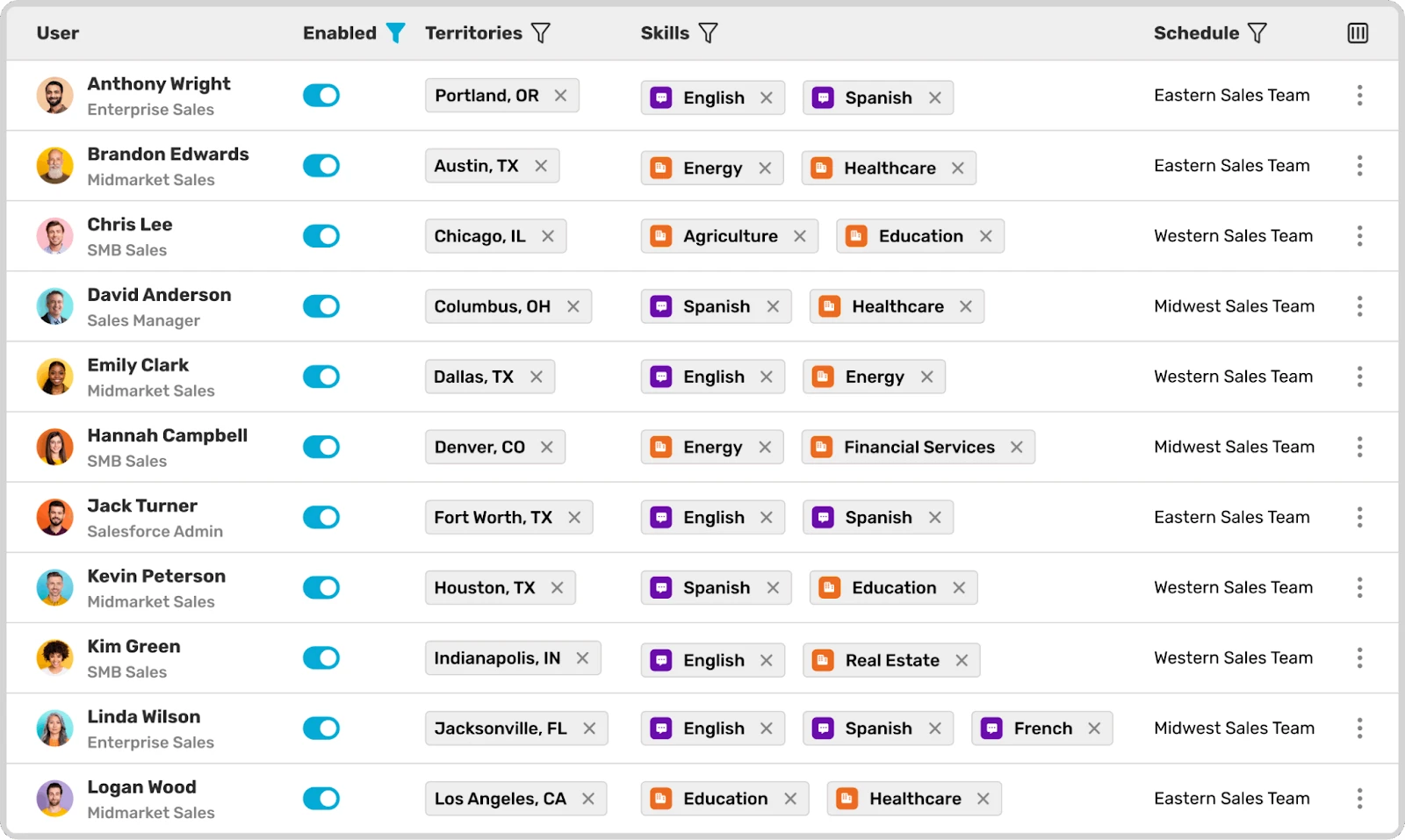
One flat plan at $20 per user each month includes everything:
- Round robin, weighted, and territory routing
- Skill-based logic and load balancing
- Availability-aware and automated reassignment
- Duplicate matching to keep related records together
No modules to license and no quote to chase.
Records never leave Salesforce, and setup takes an afternoon. Onboarding and lifetime support are free, and business users can own the rules without a specialist or an IT ticket.
Kubaru even folds in duplicate matching, so you get clean assignment without the full data-quality suite.
For a more detailed look at how the three stack up, check out our comparison page.
Frequently Asked Questions
Is Plauti a routing tool or a data-quality tool?
Primarily data quality. Plauti Assign, the former Super Round Robin app, handles routing well, but it sits inside a suite built around deduplication, validation, and cleanup.
Are LeanData and Plauti both native to Salesforce?
Yes. Both run as managed packages. Plauti processes records in-org by default, with an optional cloud mode for heavy dedup jobs. Your data stays in Salesforce with either.
Which is better for lead-to-account matching?
LeanData, for complex matching at scale. Plauti approaches matching through its deduplication engine, which is strong for data hygiene but built for a different purpose.
Which one costs less?
Both are quote-based and scale with what you add. LeanData contracts typically start above $20,000 a year, while Plauti prices per module. Kubaru's flat per-seat rate is the predictable choice.
What is the most focused alternative?
Kubaru routes natively for a flat $20 per user each month, with duplicate matching, free onboarding and support, and a 30-day trial of every feature.